
Last updated September 23, 2026
Free visual inspection and a written scope of work before any mitigation begins - photos, moisture readings, and drying logs go in your claim file
The scope we write is the scope we bill. Anything new gets shown to you, in writing, before we touch it.
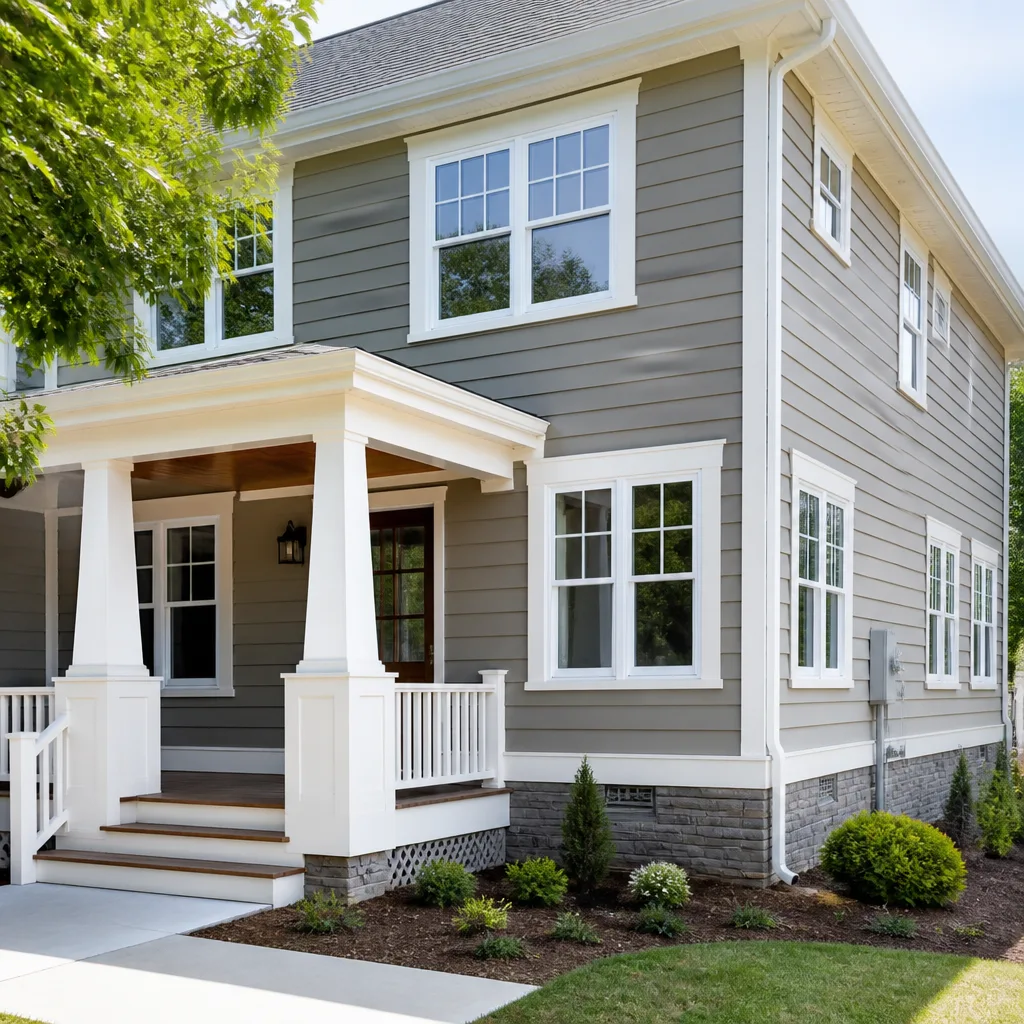
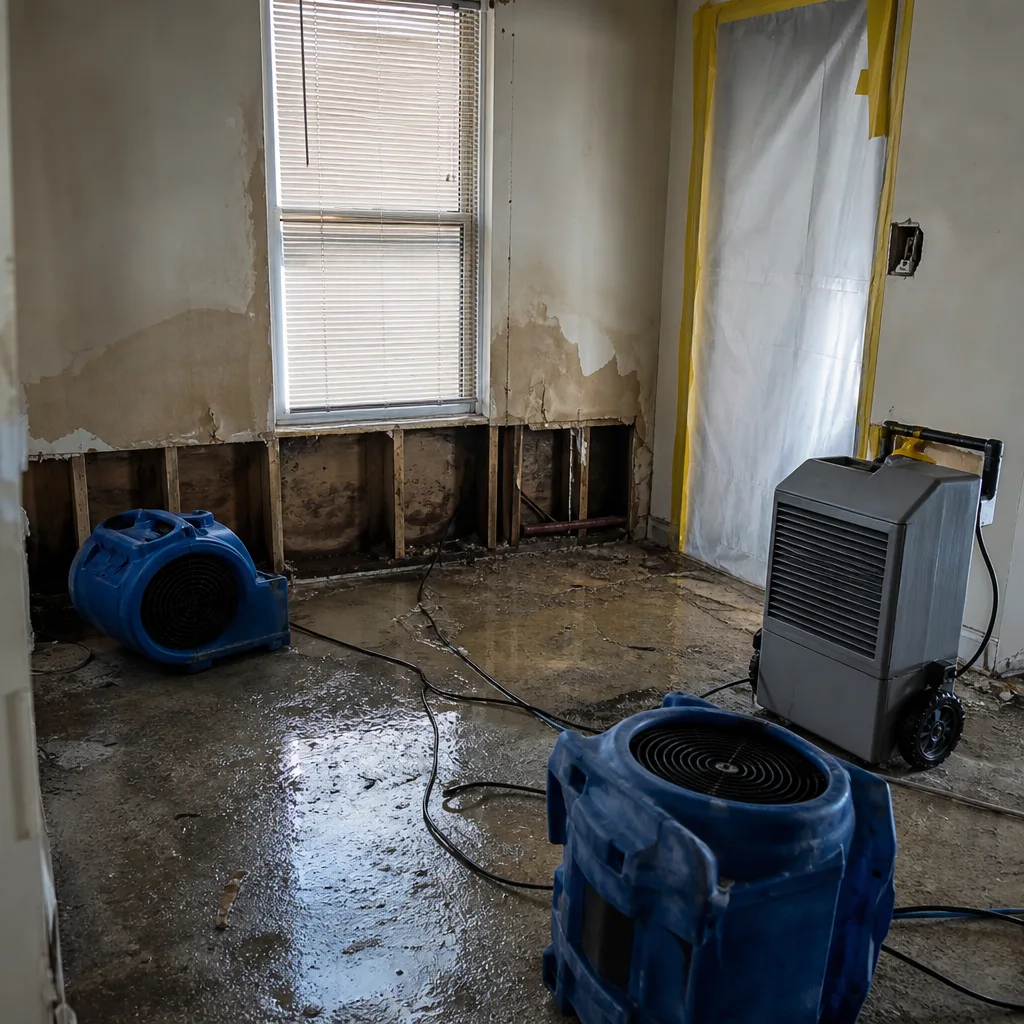 Before
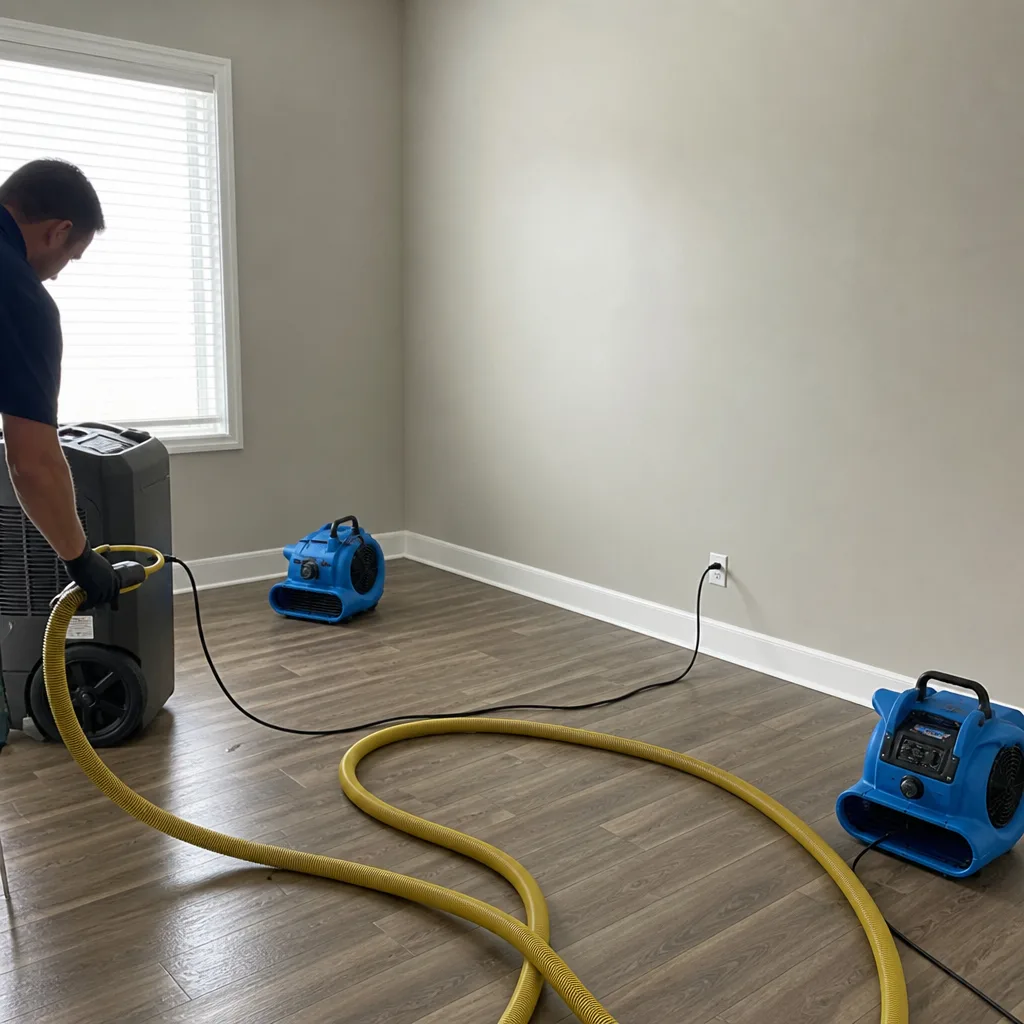 After
After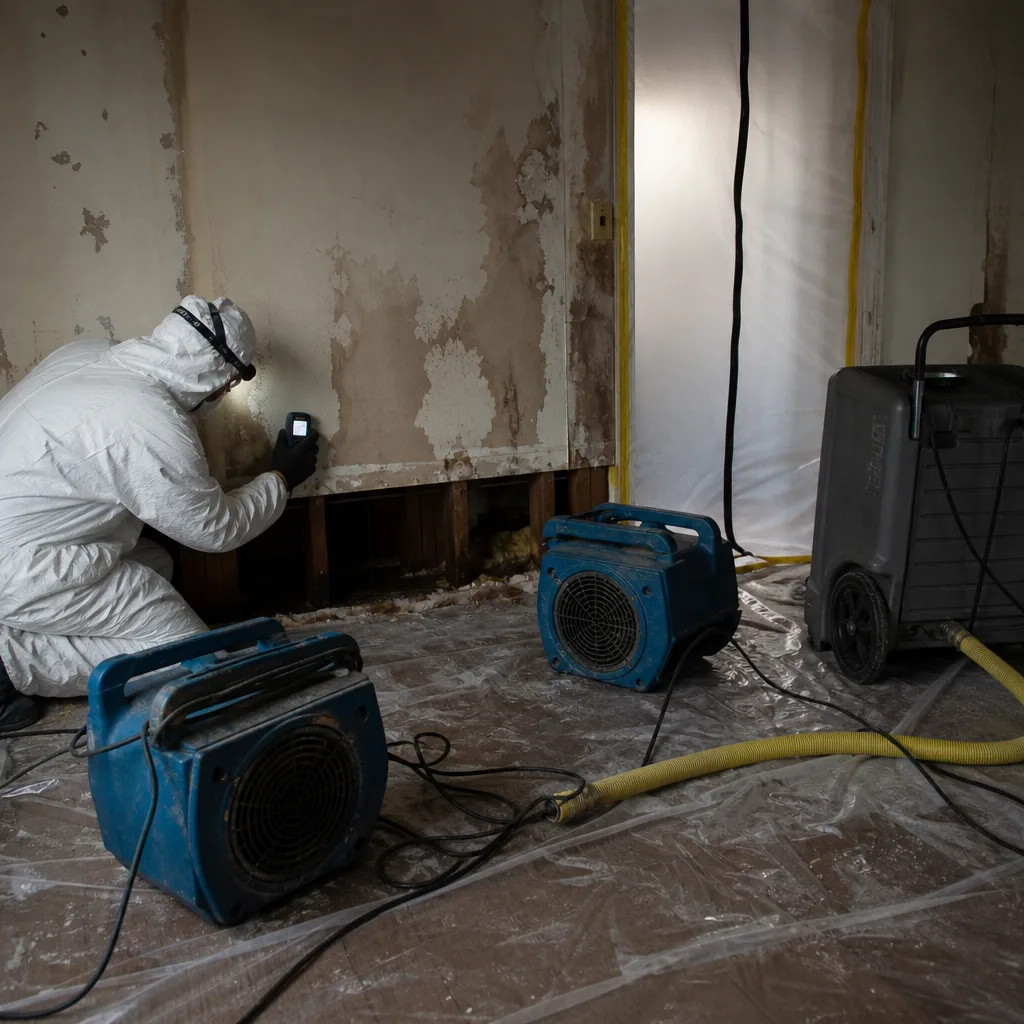 Before
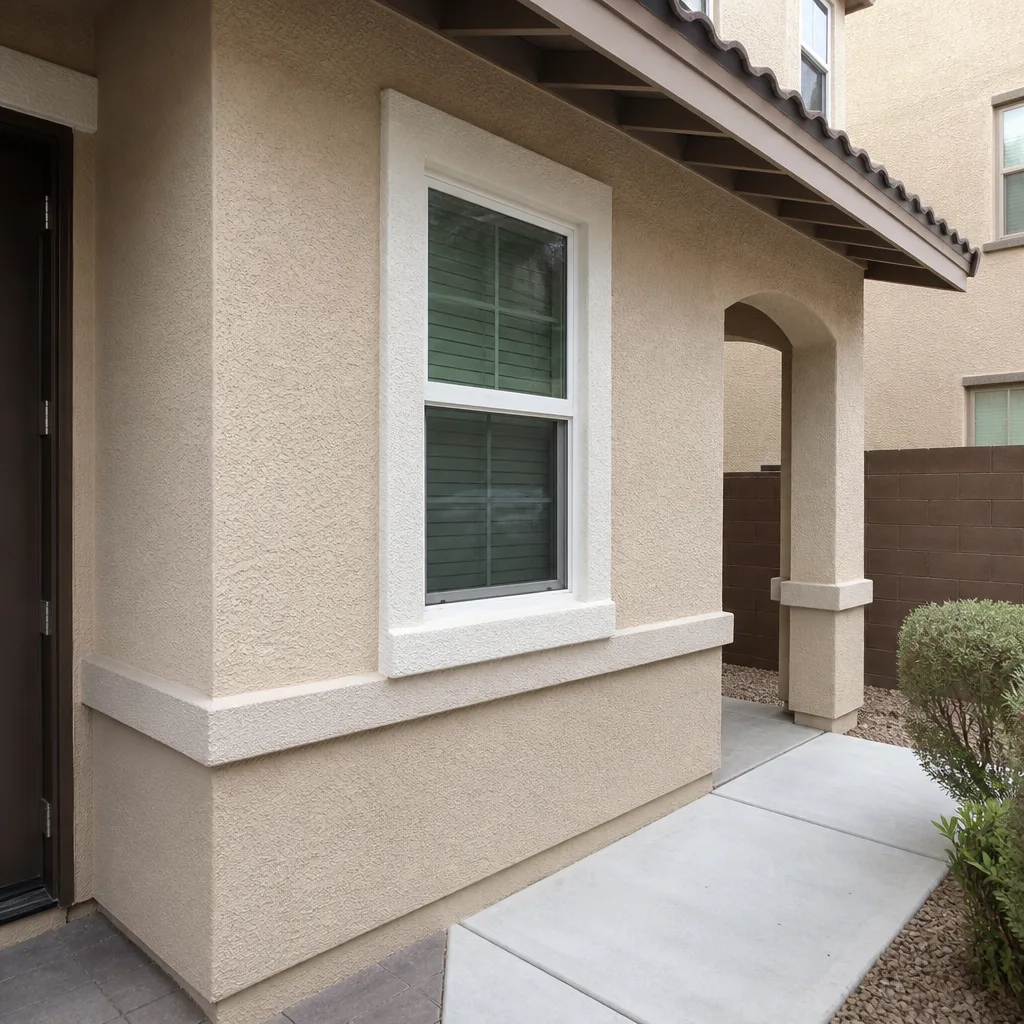 After
After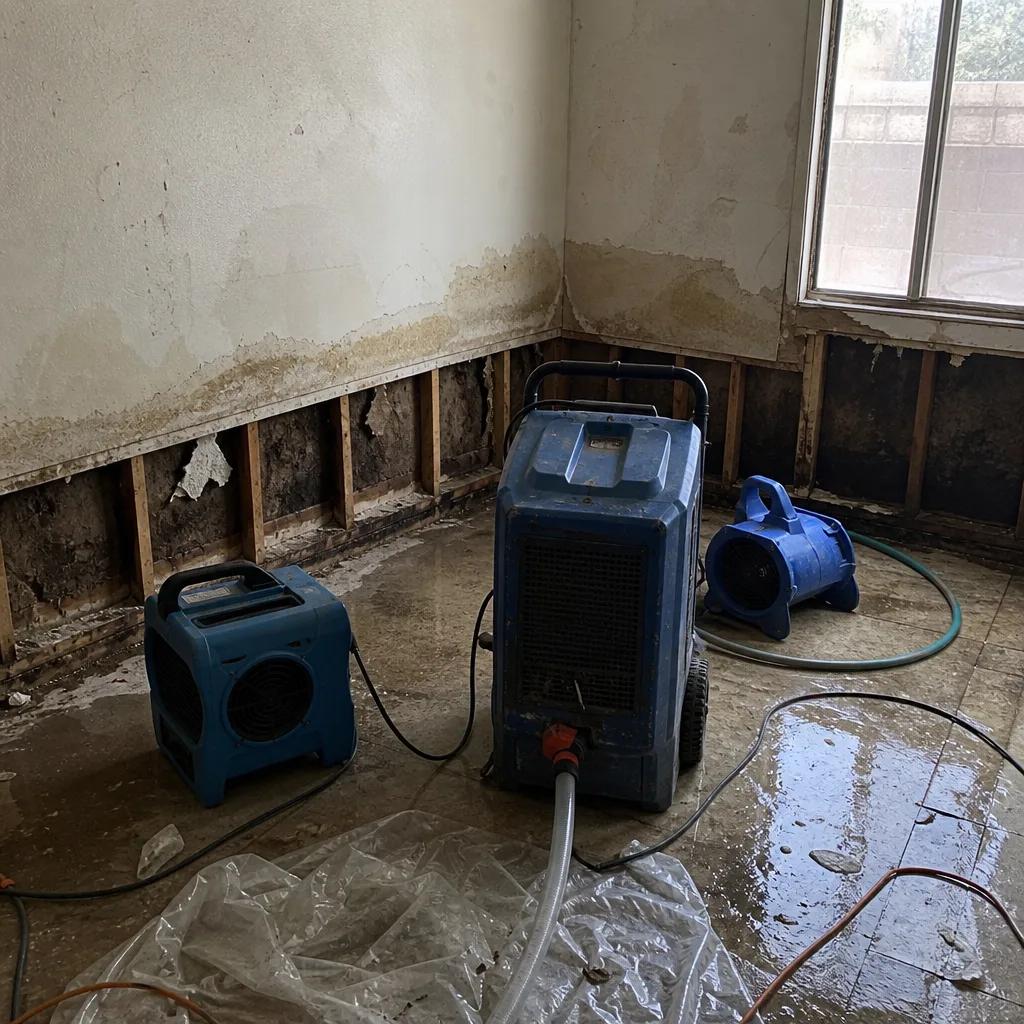 Before
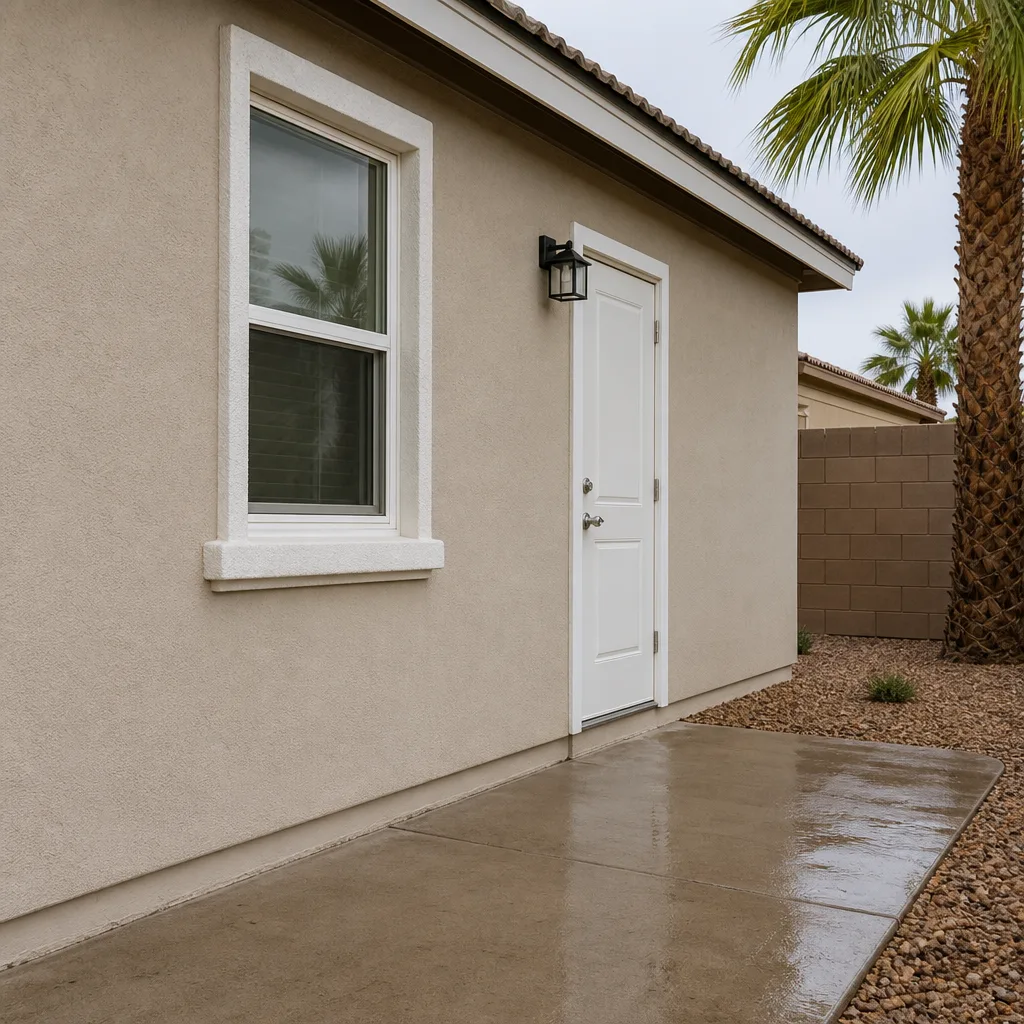 After
AfterDIY vs Professional Damage Restoration: The Las Vegas Homeowner’s Decision Guide
A Las Vegas homeowner dried a 40-square-foot bathroom water loss himself, did the work correctly, and fourteen months later watched his insurer deny a mold claim on the same area. The denial had nothing to do with the quality of his drying. He simply had no moisture log, no clearance reading, and no documentation that the original event ever occurred or was resolved. In Las Vegas, where concrete slab construction and low humidity create drying conditions unlike anywhere else in the country, the DIY versus professional question is rarely about technical competence. It is about evidence. This guide will show you when DIY drying is genuinely appropriate, what documentation gaps expose you to future claim denials, and how to calculate the real cost of doing it yourself. For step-by-step guidance on hiring a damage restoration contractor in Las Vegas, see our companion resource.
Quick Answer
DIY damage restoration in Las Vegas is appropriate only for Category 1 water, surface-level saturation under 10 square feet, with no wall cavity involvement and no concrete slab or tile backing at risk. For everything else, professional restoration is the lower-cost option when you account for the documentation chain - moisture logs, psychrometric data, and dated photo records - that prevents future claims on the same area from being denied as pre-existing conditions. Our Water Damage Restoration Maintenance Checklist for Las Vegas Homeowners details the records you need.
Table of Contents
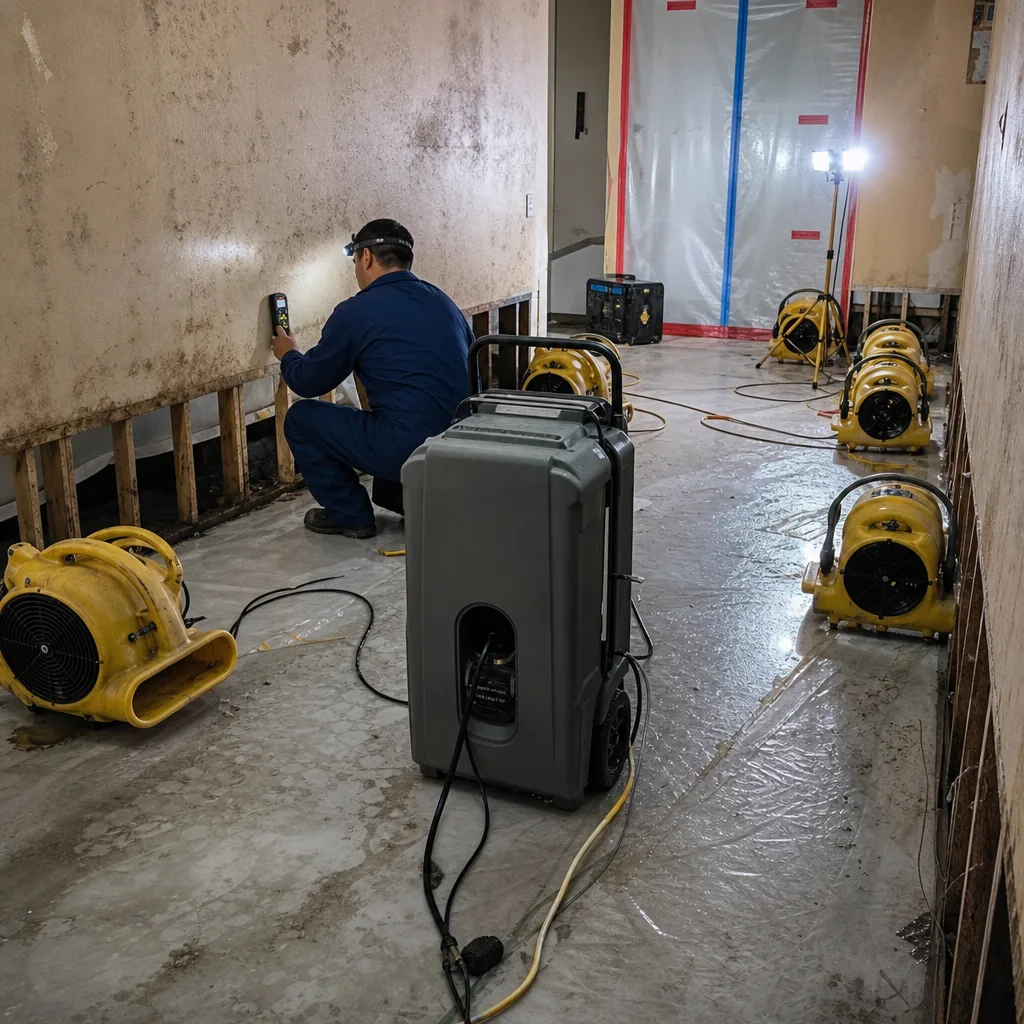
- When DIY Restoration Actually Makes Sense in Las Vegas
- The Documentation Gap: Why DIY Work Becomes a Future Claim Denial
- Las Vegas Moisture Thresholds and Why Consumer Meters Fail
- Nevada HO-3 Policy Language: When DIY Satisfies ‘Reasonable Measures’ and When It Backfires
- The Real Cost Calculation: DIY ‘Savings’ vs. Future Claim Denial Probability
- What Professional Restoration Produces That DIY Cannot
- Common Mistakes to Avoid
- When to Call a Professional
- Frequently Asked Questions
BeforeAfterWhen DIY Restoration Actually Makes Sense in Las Vegas
There are exactly three scenarios where DIY water damage restoration is genuinely appropriate in Las Vegas, and each has measurable criteria that must all be met simultaneously. Violate any one condition, and the risk profile shifts dramatically.
Scenario One: Category 1 water source. This is clean water from a ruptured supply line, ice maker, or overflowing sink with no contaminants. Category 2 (gray water from dishwashers or washing machines) and Category 3 (black water from sewage or ground flooding) require professional handling under IICRC S500 standards. In Las Vegas, where summer temperatures regularly exceed 105°F, Category 2 water degrades to Category 3 in as little as 48 hours. The margin for error is narrow.
Scenario Two: Surface-level saturation only, under 10 square feet. The water has not wicked into wall cavities, seeped under baseboards, or reached the subfloor. You can verify this with a non-invasive moisture meter reading below 16% on exposed wood and no elevated readings at the base of drywall. In Summerlin and Henderson homes built after 2005, this often means a spill on tile over a wood subfloor with adequate crawl space ventilation. In older Las Vegas neighborhoods like Huntridge or near downtown, where concrete slab is standard, even a small surface spill can migrate through grout lines to the slab edge. Consumer meters cannot read concrete moisture accurately.
Scenario Three: No wall cavity involvement and no insulation contact. Water has not reached the gap between drywall and stud, has not saturated batt insulation, and has not contacted fireblocking or vapor barriers. Las Vegas building code requires vapor barriers in exterior walls, but installation quality varies dramatically by builder and era. A 1990s tract home in North Las Vegas may have incomplete vapor barrier sealing that allows lateral moisture migration invisible from the surface.
If all three conditions are met, DIY drying requires: extraction with a wet/dry vacuum rated for water removal, air movement with fans positioned to create laminar airflow across the wet surface, dehumidification sized to the space (approximately 70 pints per day for a standard bathroom), and daily moisture readings with a pin-type meter on exposed materials. The work must be documented with dated photos, meter readings, and a drying log. Without this documentation, you have no evidence the event occurred or was resolved.
Even in these limited scenarios, we recommend professional water damage restoration in Las Vegas for any water loss affecting flooring over concrete slab, which describes the majority of post-1990 Las Vegas construction.
The Documentation Gap: Why DIY Work Becomes a Future Claim Denial
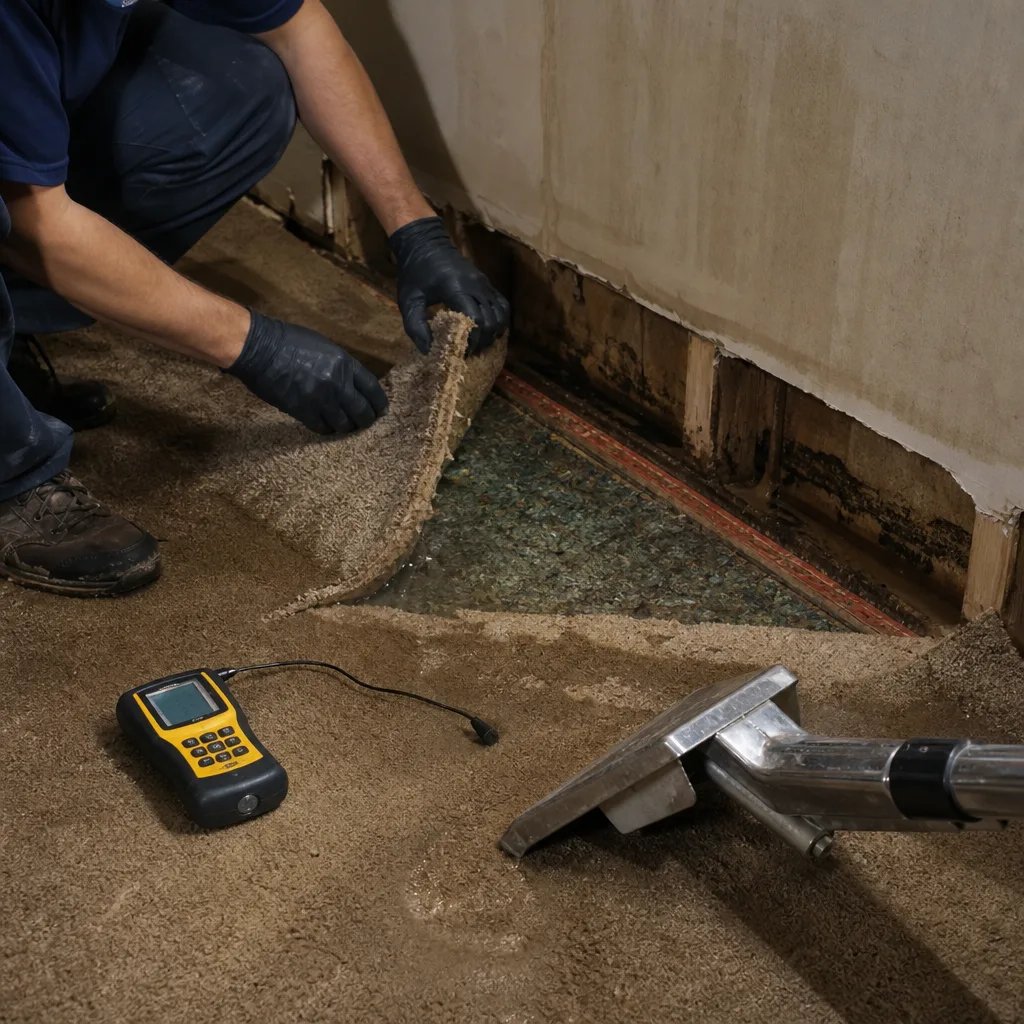
Insurance claims operate on a principle called “documented pre-loss condition.” When you file a claim for mold, secondary water damage, or structural deterioration in an area previously affected by water, the adjuster’s first question is whether the current damage stems from a new event or an unresolved prior condition. If you cannot produce evidence that the prior event was fully mitigated, the insurer will classify the damage as pre-existing and deny coverage.
This is where DIY restoration fails catastrophically, even when the technical work was sound.
A professional restoration company produces four documents that DIY cannot replicate: a dated moisture log showing daily readings until materials returned to dry standard, a final clearance report with psychrometric data proving the drying goal was achieved, a photo record with timestamps showing condition at each phase, and a written scope signed by both parties confirming the work performed and its completion date. These documents create a chain of evidence that severs the causal link between prior and current damage.
In our experience serving Las Vegas since 2011, we have reviewed hundreds of denied claims where homeowners performed competent DIY drying. The most common pattern: a water loss in a bathroom or kitchen, successfully dried with fans and a rental dehumidifier, followed 12 to 24 months later by mold discovery or flooring failure. The insurer denies because there is no contemporaneous record of the original drying. The homeowner’s testimony - “I dried it completely” - carries no evidentiary weight against the insurer’s position that moisture was never fully removed.
The DryMark Restoration Las Vegas home page outlines our documentation-first approach, which was built specifically to close this gap.
The financial exposure is not theoretical. A mold remediation in a Las Vegas single-family home averages $15,000 to $30,000 depending on affected square footage and containment requirements. A flooring replacement over concrete slab, including moisture barrier and leveling compound, runs $8,000 to $18,000 for a standard kitchen or great room. When these costs fall to the homeowner due to a prior documentation gap, the “savings” from DIY drying are erased many times over.
Las Vegas Moisture Thresholds and Why Consumer Meters Fail
Las Vegas presents unique drying challenges that make moisture documentation particularly critical. The climate is arid, with average relative humidity below 30% for much of the year. This creates a deceptive surface-dry condition: materials feel dry to the touch while retaining elevated moisture at depth. The combination of concrete slab construction, tile flooring with thin-set mortar, and stucco exterior systems common in Las Vegas homes produces moisture traps that consumer equipment cannot detect or resolve.
Dry standard targets for Las Vegas restoration:
- Structural wood (studs, joists, subfloor): 10-12% moisture content
- Drywall: below 0.5% above established baseline for that wall assembly
- Concrete slab: 75% or less relative humidity at 40% slab depth per ASTM F2170
- Tile and mortar bed: equilibrium with surrounding materials, verified by calcium chloride testing or in-situ probes
These targets are not arbitrary. They represent the moisture levels at which microbial growth is statistically unlikely and material degradation stops. Achieving them requires more than time and air movement; it requires controlled dehumidification, targeted heat application, and negative air pressure systems that draw moisture from concealed assemblies.
Consumer-grade meter limitations:
Pin-type meters available at hardware stores measure conductivity between two probes, which correlates roughly with moisture content in softwoods. They cannot read moisture in concrete, cannot penetrate tile or stone, and produce unreliable readings on engineered wood products common in Las Vegas flooring. Non-invasive meters using radio frequency detect moisture to approximately 3/4 inch depth, which misses moisture in wall cavities, behind tile backer board, and at the slab interface where most Las Vegas water losses eventually migrate.
Professional restoration employs thermo-hygrometers, thermal imaging cameras, and in-situ concrete probes to measure conditions consumer equipment cannot access. A Dri-Eaz or Phoenix dehumidifier paired with Injectidry panel drying or mat systems creates the vapor pressure differential that pulls moisture from these concealed assemblies. Without this equipment and the training to interpret its readings, DIY drying achieves surface dryness while leaving elevated moisture at the failure points that matter for long-term building health and insurance documentation.
In The Lakes, Summerlin South, and other high-value Las Vegas neighborhoods where homes often feature imported tile and custom mortar beds, the cost of undetected slab moisture includes not just flooring replacement but potential damage to floor heating systems embedded in the mortar.
Nevada HO-3 Policy Language: When DIY Satisfies ‘Reasonable Measures’ and When It Backfires
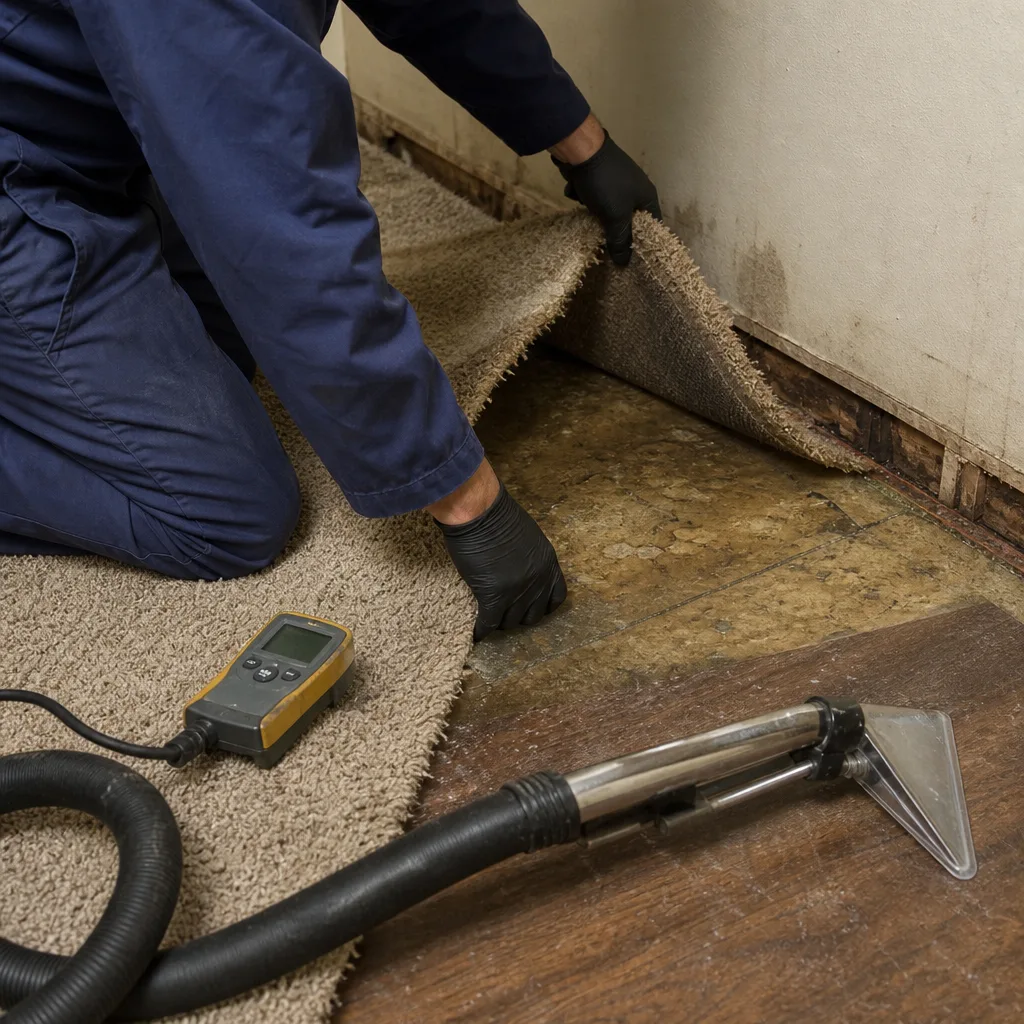
Standard Nevada homeowners policies, written predominantly on HO-3 forms, contain a duty to mitigate clause requiring the policyholder to take “reasonable measures to protect the property from further damage.” This language creates both an obligation and a trap for DIY restoration.
When DIY satisfies the clause:
A prompt, competent response to a minor water loss - extraction, air movement, and documented drying - demonstrates diligence. The key is documentation. If you can produce dated photos, a drying log, and evidence that materials reached dry standard, your DIY effort supports the claim rather than undermining it. The insurer’s obligation is to indemnify for covered losses; your obligation is to prevent unnecessary additional damage. Competent DIY with records satisfies both.
When DIY becomes evidence of negligence:
The trap emerges when DIY is attempted on losses beyond the homeowner’s capability, or when documentation is absent. Nevada courts have upheld claim denials where homeowners used household fans on Category 2 water, failed to remove saturated drywall, or delayed professional intervention while attempting self-mitigation. The insurer’s position: the homeowner’s actions, however well-intentioned, exacerbated the damage or allowed secondary conditions to develop, converting a covered water loss into an uninsured mold claim.
Specific policy language to understand:
- “Reasonable measures” is interpreted by adjusters based on industry standard, which means IICRC S500 protocols for water damage restoration
- “Prompt” typically means within 24 hours for water losses; beyond 48 hours, most carriers classify the loss as having secondary damage potential that required professional intervention
- “Documented” is not explicitly required by most policies, but becomes the dispositive factor in any dispute over whether mitigation was reasonable or complete
The critical distinction: DIY drying without documentation does not prove you took reasonable measures. It proves you took some measures, but leaves their adequacy contested. Professional restoration with IICRC-compliant documentation shifts the burden. The insurer must now prove the work was inadequate, rather than you proving it was sufficient.
For fire and smoke damage restoration in Las Vegas, this documentation gap is even more consequential, as smoke damage claims often involve disputed causation and scope.
The Real Cost Calculation: DIY ‘Savings’ vs. Future Claim Denial Probability
The standard framing of DIY versus professional restoration compares immediate out-of-pocket costs: rental equipment, supplies, and your time against a professional invoice. This framing is incomplete and misleading for Las Vegas homeowners, who face a specific risk profile tied to local construction methods and insurance practices.
DIY cost components (realistic):
- Commercial dehumidifier rental: $200-$400 per week (Las Vegas rental market rates)
- Air mover/fan rental: $25-$40 per day per unit, typically 3-4 units needed
- Wet/dry vacuum or carpet extractor rental: $50-$100 per day
- Moisture meter (pin-type, consumer grade): $50-$150 purchase
- Personal protective equipment, antimicrobial treatments, disposal: $100-$300
- Value of homeowner time: 15-30 hours for monitoring, documentation, and equipment management
Total DIY cost for a modest water loss: $800-$2,000 in hard costs plus time.
Professional restoration cost for equivalent loss (Las Vegas market):
- Category 1 water, 50-150 square feet, no structural damage: $1,500-$3,500
- Same loss with wall cavity drying or tile floor involvement: $3,000-$6,500
The apparent DIY savings: $700-$4,500 depending on loss complexity.
The adjustment most homeowners miss: probability-weighted future claim denial.
Industry data on Las Vegas water losses shows approximately 15-25% of homes with undocumented prior water damage experience a related claim within 24 months. The most common trigger: mold in previously wet wall cavities, flooring failure over moisture-compromised slab, or odor and staining from residual moisture. When these claims are denied due to lack of documentation, the homeowner bears full replacement cost.
Expected value calculation for a typical Las Vegas home with $400,000 replacement coverage:
If probability of future related claim is 20%, and average denied claim cost is $12,000 (midpoint of mold remediation range), the expected future cost of DIY is $2,400. Added to DIY hard costs of $1,400, total expected DIY cost becomes $3,800 - equivalent to or exceeding professional restoration with full documentation and warranty.
This calculation worsens for higher-value homes in Summerlin, Henderson, or The Ridges, where finishes and systems are more expensive to replace, and where insurers apply stricter documentation standards due to higher claim values. It also worsens for any home with prior claims history, where insurers scrutinize new claims more aggressively for pre-existing condition exclusions.
The Haven Standard, Clause 1, requires a written price before any work begins, so this comparison can be made with exact figures rather than estimates. We provide free second opinions on any competitor’s written estimate, allowing direct cost comparison with documentation value included.
What Professional Restoration Produces That DIY Cannot
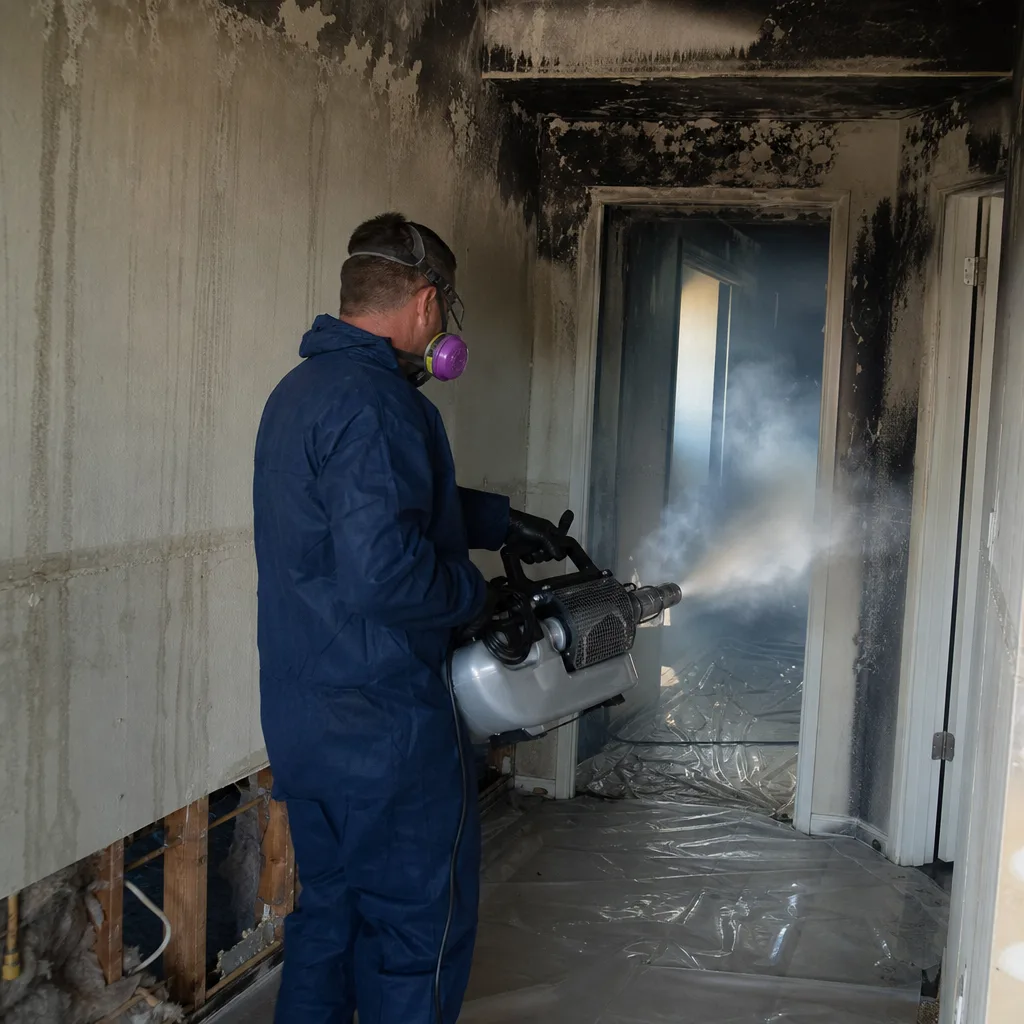
Professional water damage restoration under IICRC S500 standards produces deliverables that serve three distinct purposes: technical verification that drying is complete, insurance documentation that protects future claims, and warranty protection that transfers residual risk to the restoration company.
Technical deliverables:
- Daily drying log - psychrometric data including temperature, relative humidity, and specific humidity readings for each affected room, recorded at the same time daily, with equipment placement maps and CFM calculations showing air changes per hour. Psychrometric data, simply put, is the measurement of how much moisture air can hold at a given temperature; it tells us whether the dehumidification is actually working or just moving wet air around.
- Moisture content readings - structural wood, drywall, concrete, and flooring materials, recorded with meter type, calibration date, and depth of reading. Tertiary drying, the final phase where materials approach equilibrium with the surrounding environment, is documented with readings taken after primary extraction and secondary dehumidification are complete.
- Equipment inventory and specifications - dehumidifier pint capacity, air mover CFM, and any specialized systems such as Injectidry cavity drying or negative air machines, with serial numbers for verification.
Insurance deliverables:
- Dated photo record on every visit - standard deliverable, never an upsell, showing condition at arrival, during work, and at completion, with metadata preserved for evidentiary purposes.
- Written scope of work - signed by both parties before work begins, under Haven Standard, Clause 1, with no additions once the crew is inside.
- Final clearance report - certifying that materials have reached dry standard and the drying goal has been achieved, with all supporting data attached.
Warranty deliverables:
The 365-Day Done Right Promise, backed by The Haven Standard, provides that if any restoration-related issue emerges within one year, we make it right. This is a signed guarantee, not a marketing line. For DIY restoration, the warranty period is zero days, and the liability for any failure rests entirely with the homeowner.
Professional-grade drying systems from Dri-Eaz, Phoenix, and other manufacturers produce the vapor pressure differential that pulls moisture from materials and cavities. Vapor pressure differential, in plain terms, is the force that makes moisture move from wet areas to dry areas; professional equipment creates and controls this force at levels consumer equipment cannot achieve. The daily moisture logs this equipment generates, documented to IICRC, RIA, and IFA standards, are what convert restoration invoices into claims insurers pay without dispute.
For mold remediation in Las Vegas, these documentation requirements are even more stringent, as mold claims face heightened scrutiny for prior water history.
Common Mistakes to Avoid
- Assuming surface dryness means complete drying. In Las Vegas arid climate, surfaces dry rapidly while concealed moisture remains. Always verify with pin-type readings at depth, or assume incomplete drying.
- Using household fans without dehumidification. Moving wet air across wet materials accelerates evaporation but increases humidity in the space, slowing net drying and promoting secondary microbial growth in concealed areas.
- Ignoring tile and grout lines. Las Vegas homes commonly have tile over thin-set mortar on concrete slab. Water migrates through grout to the slab edge, where consumer meters cannot detect it. This is the most common DIY drying failure we encounter in Las Vegas.
- Failing to document with dated photos and meter readings. Without this record, you have no evidence the event occurred or was resolved. A phone photo with timestamp and a notebook entry costs nothing and may save thousands.
- Delaying while deciding whether to call a professional. Nevada HO-3 policy language interprets delay as failure to mitigate. Beyond 48 hours, most carriers will classify secondary damage as resulting from homeowner inaction, not the original water loss.
- Attempting DIY on Category 2 or 3 water. Gray and black water carry microbial and chemical contaminants that require professional containment, disposal, and antimicrobial treatment under IICRC standards. DIY attempts on contaminated water are routinely cited as negligence in claim disputes.
- Overlooking insurance notification requirements. Most policies require prompt notice of water losses, even if you intend to handle mitigation yourself. Failure to notify can void coverage for the original loss and any subsequent claims.
When to Call a Professional
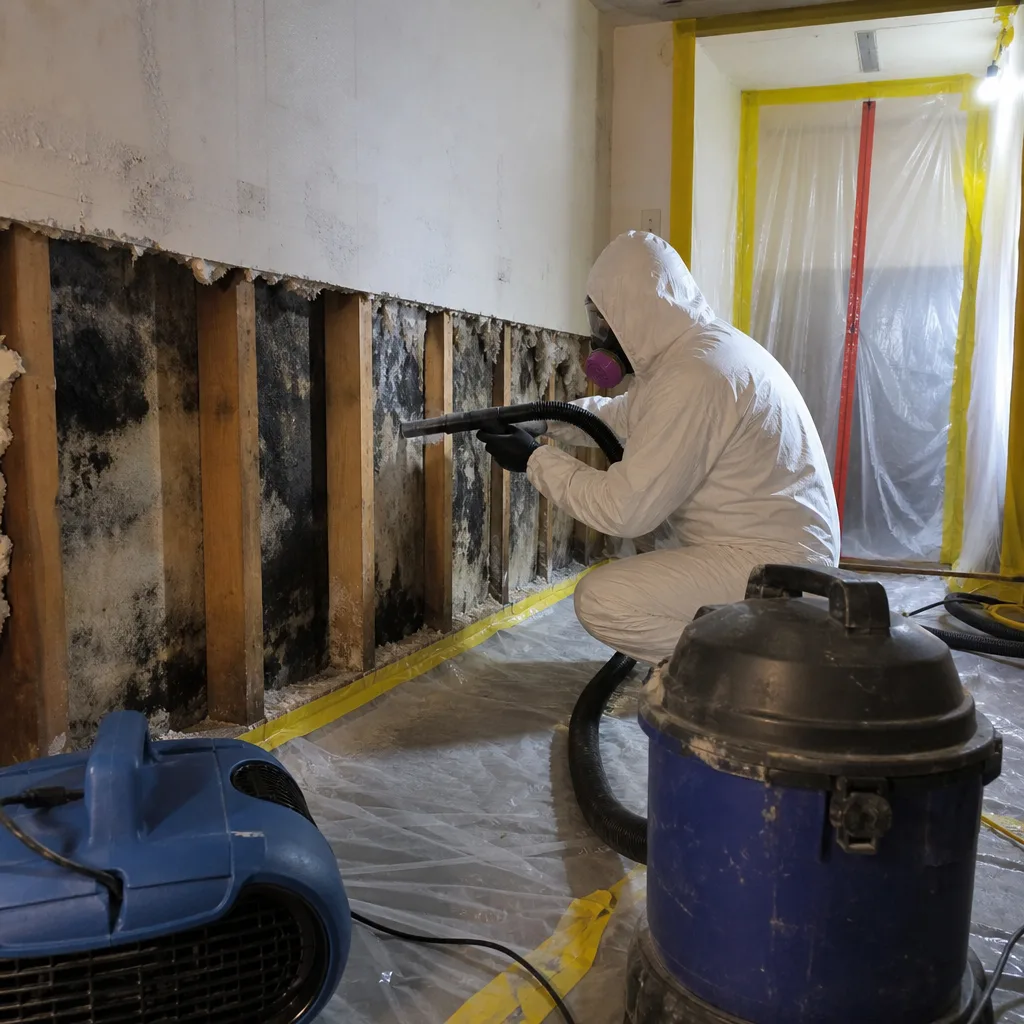
Call a professional restoration company when any of the following apply: the water source is Category 2 or 3; affected area exceeds 10 square feet; water has contacted wall cavities, insulation, or concrete slab; the loss occurred more than 24 hours ago; you cannot verify dry standard with appropriate metering equipment; or you have any prior water loss in the same area without complete documentation.
DryMark Restoration Las Vegas offers free estimates in Las Vegas. Our live phone coverage is available 24 hours a day, 7 days a week with no voicemail on emergency lines. Every job is quoted in writing before work begins under Haven Standard, Clause 1. We provide a free second opinion on any competitor’s written estimate. Call (702) 483-7932.
Frequently Asked Questions
Professional Category 1 water damage restoration for 50-150 square feet in Las Vegas typically runs $1,500-$3,500, while DIY equipment rental and supplies cost $800-$2,000 plus 15-30 hours of your time. When you factor in the 20% probability of a future related claim being denied due to lack of documentation, with average denied costs of $12,000, the expected total cost of DIY often exceeds professional service. Call (702) 483-7932 for a written price before any work begins - estimates are free.
Your insurance company will accept DIY mitigation only if you can produce documentation proving the work was complete and met industry standard. This means dated photos, a daily drying log with moisture readings, and evidence that materials reached dry standard. Without this documentation, insurers routinely classify subsequent damage in the same area as pre-existing and deny coverage. Nevada HO-3 policies require “reasonable measures to mitigate,” which adjusters interpret as IICRC S500-compliant work with records.
DryMark Restoration Las Vegas maintains live phone coverage 24 hours a day, 7 days a week with no voicemail on emergency lines. For active water losses, we dispatch background-checked, uniformed technicians with documented license verification. Response times vary by location and current demand, but emergency water mitigation is prioritized based on active damage potential. Call (702) 483-7932 for current availability and a written scope before any work starts.
You can handle surface water cleanup yourself if the loss is Category 1, under 10 square feet, with no wall cavity or concrete slab involvement, and you document everything. For all other conditions, professional restoration is necessary to achieve the documentation chain that protects future claims. The question is not whether you can remove visible water; it is whether you can prove the concealed moisture was eliminated to a standard an insurer will accept 14 months later.
At DryMark Restoration Las Vegas, we coordinate directly with your adjuster, providing the documented photo record, daily drying logs, and written scope that adjusters need to approve claims without dispute. Our documentation-first approach was built by a former claims adjuster who understood that incomplete records cause denials. We do not ask you to mediate between our work and your insurer’s requirements.
Structural wood must reach 10-12% moisture content, drywall must read within 0.5% of its established baseline, and concrete slab must test at 75% or less relative humidity at 40% depth per ASTM F2170. These targets account for Las Vegas arid climate, which produces misleading surface dryness. Consumer pin-type meters cannot reliably measure concrete or moisture behind tile; professional thermo-hygrometers and in-situ probes are required for verification.
DryMark Restoration Las Vegas provides the 365-Day Done Right Promise backed by The Haven Standard: if it’s not done right, we make it right. This is a signed guarantee on every job, not a verbal assurance. DIY restoration carries no warranty period, and any subsequent damage becomes your financial responsibility without documentation to support a claim.
The Bottom Line
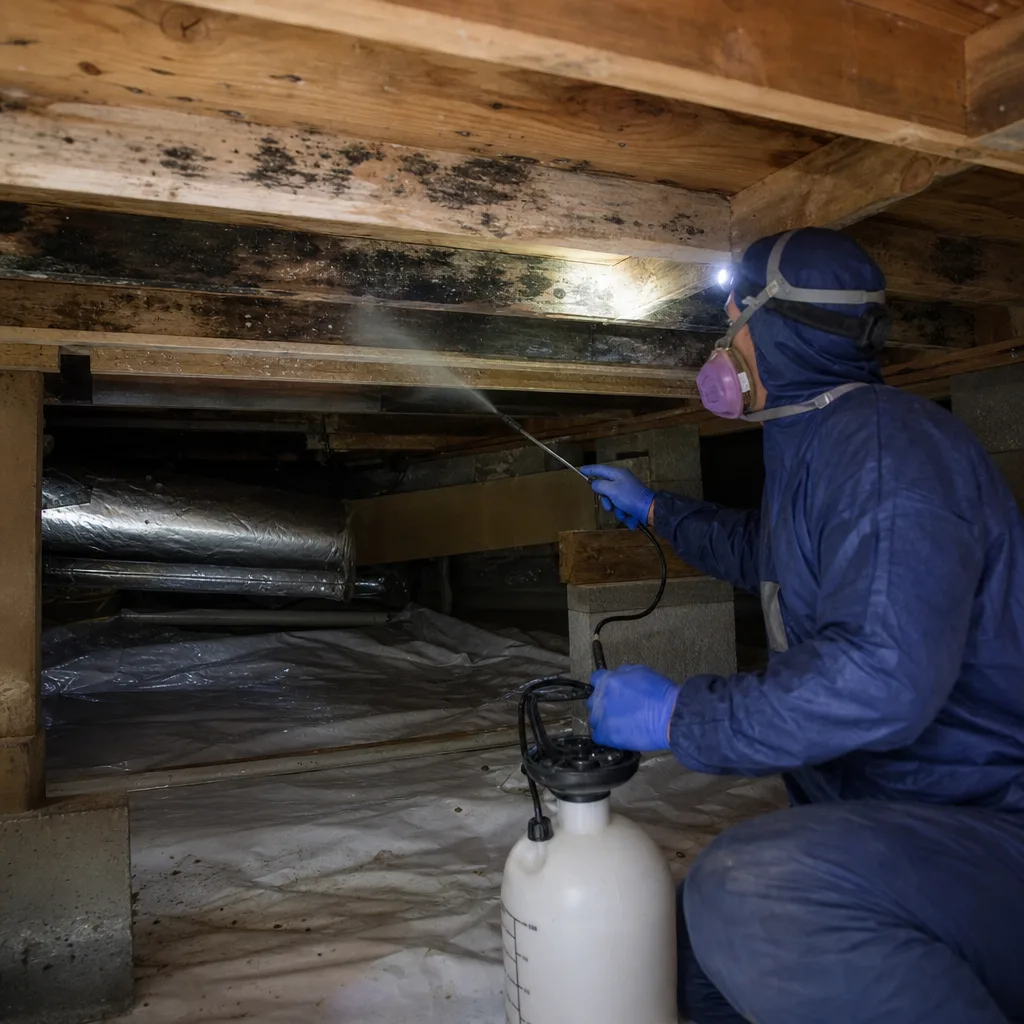
The DIY versus professional restoration decision in Las Vegas is not primarily about technical skill or immediate cost. It is about whether you can produce the documentation chain - moisture logs, psychrometric data, dated photos, and a written scope - that severs the causal link between today’s water loss and tomorrow’s mold or flooring claim. For Category 1 losses under 10 square feet with no concealed moisture, DIY is viable if meticulously documented. For everything else, professional restoration under IICRC standards is the lower-cost option when future claim denial probability is included in the calculation. The arid climate, concrete slab construction, and tile flooring common in Las Vegas homes create moisture traps that consumer equipment cannot detect or resolve. Professional-grade drying systems, documented to industry standards, produce the evidence that turns restoration invoices into payable claims and protects your coverage for years to come.
Written by Alicia Brennan, Owner at DryMark Restoration Las Vegas, serving Las Vegas since 2011.