
Last updated September 23, 2026
Free visual inspection and a written scope of work before any mitigation begins - photos, moisture readings, and drying logs go in your claim file
The scope we write is the scope we bill. Anything new gets shown to you, in writing, before we touch it.
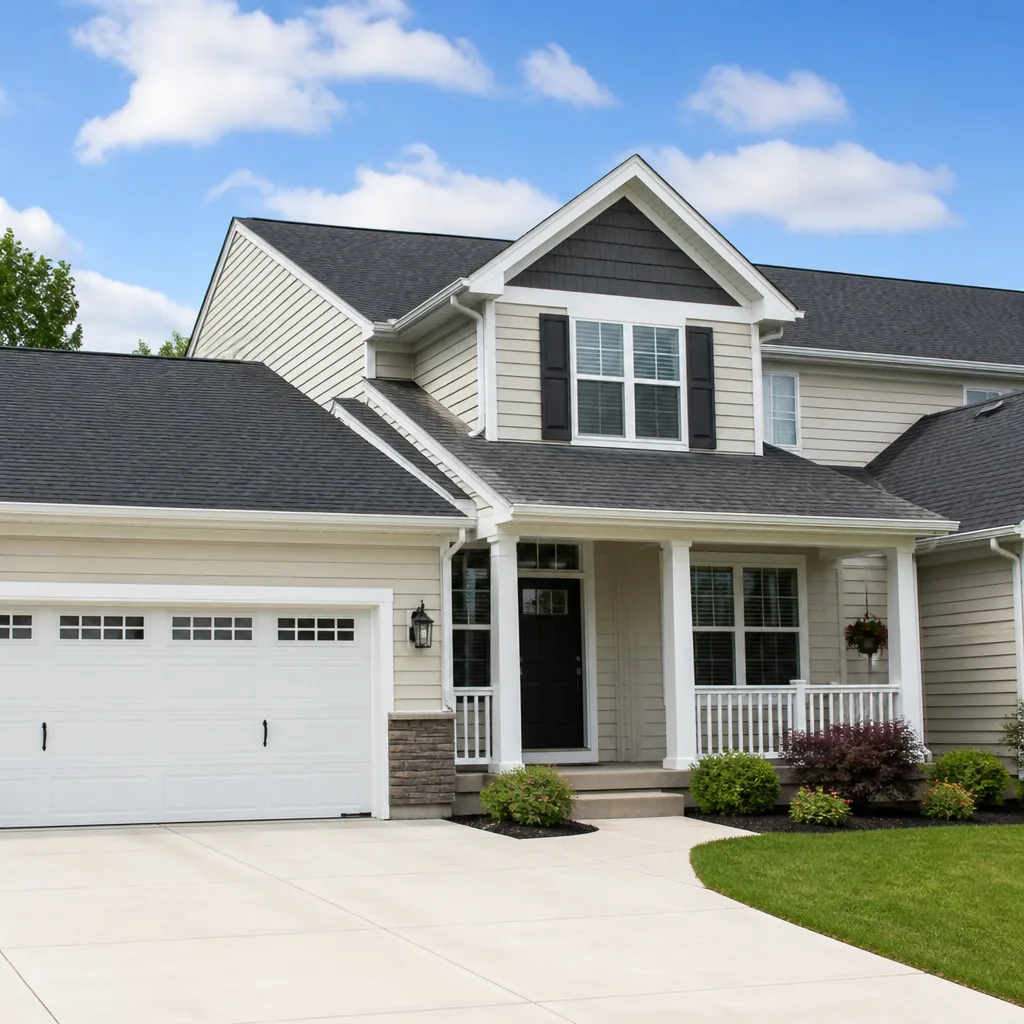
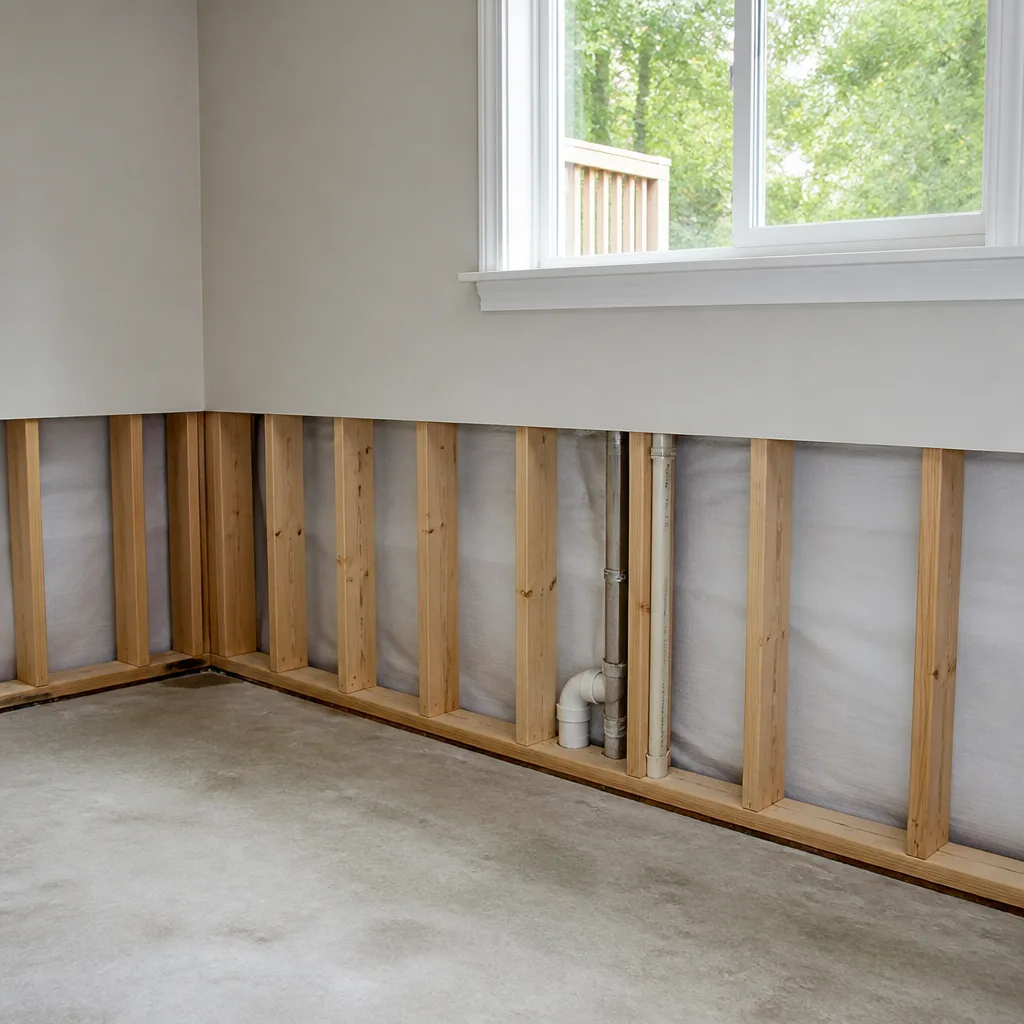
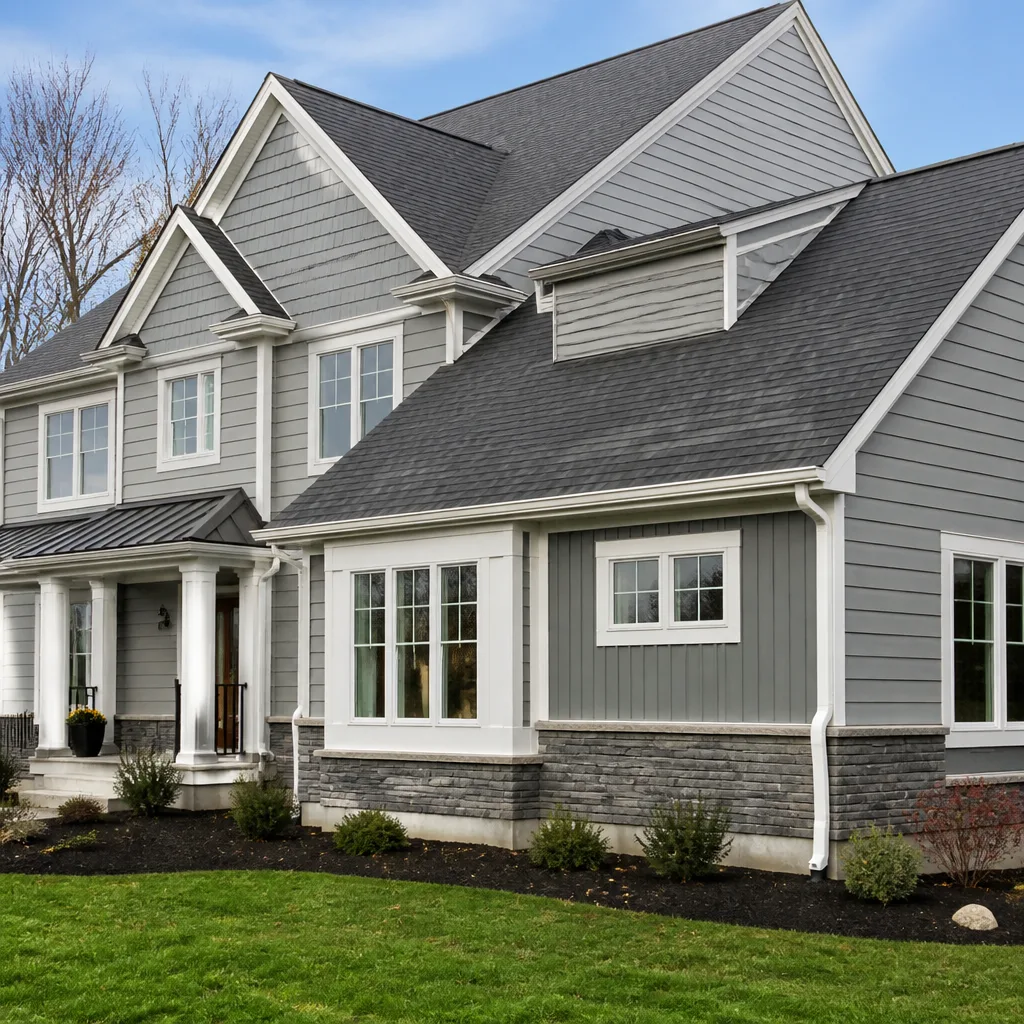
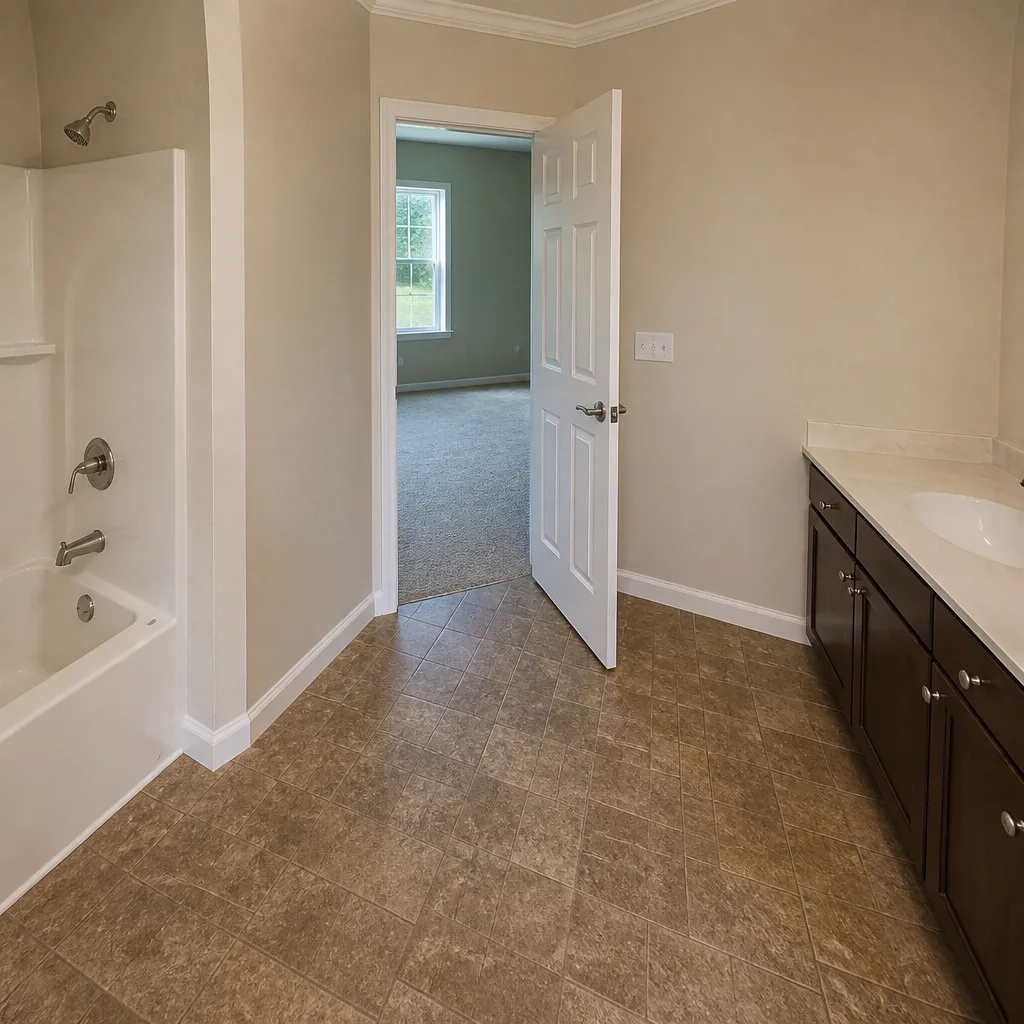
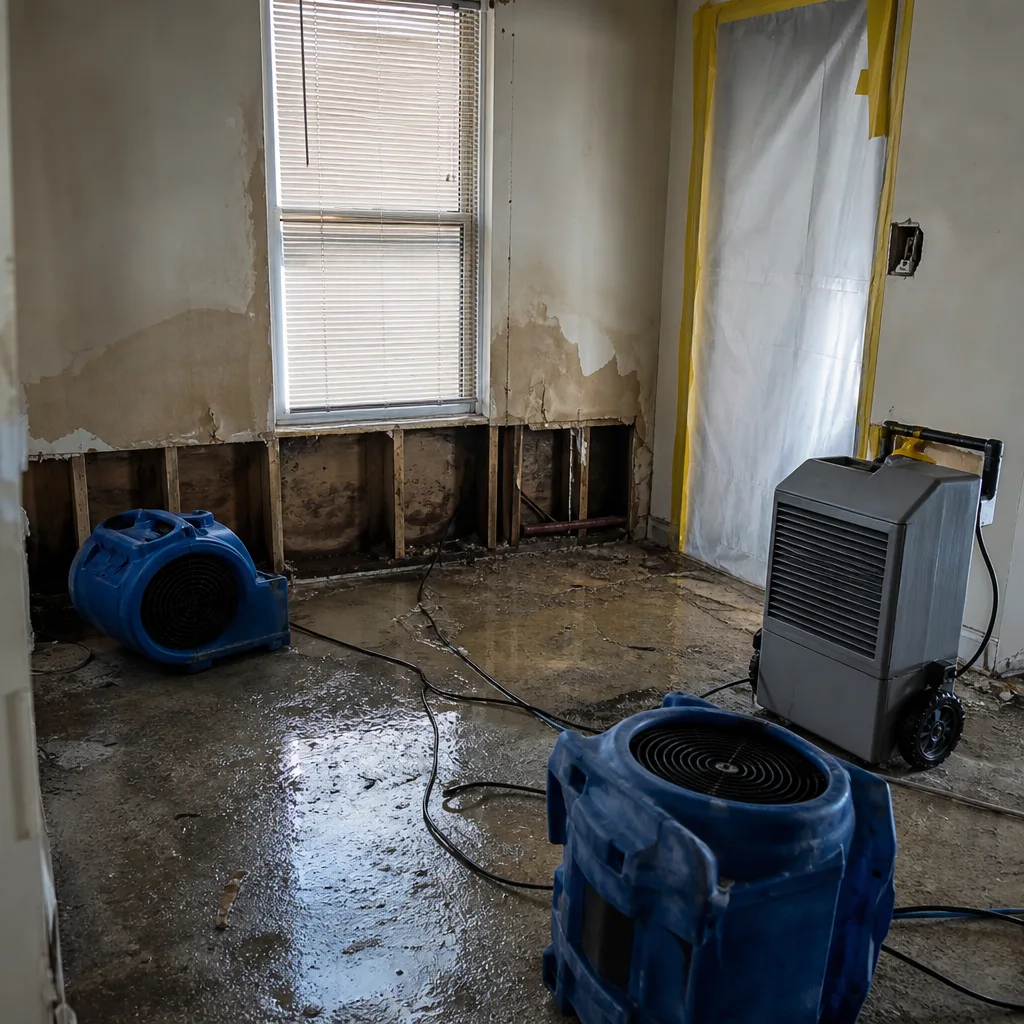 Before
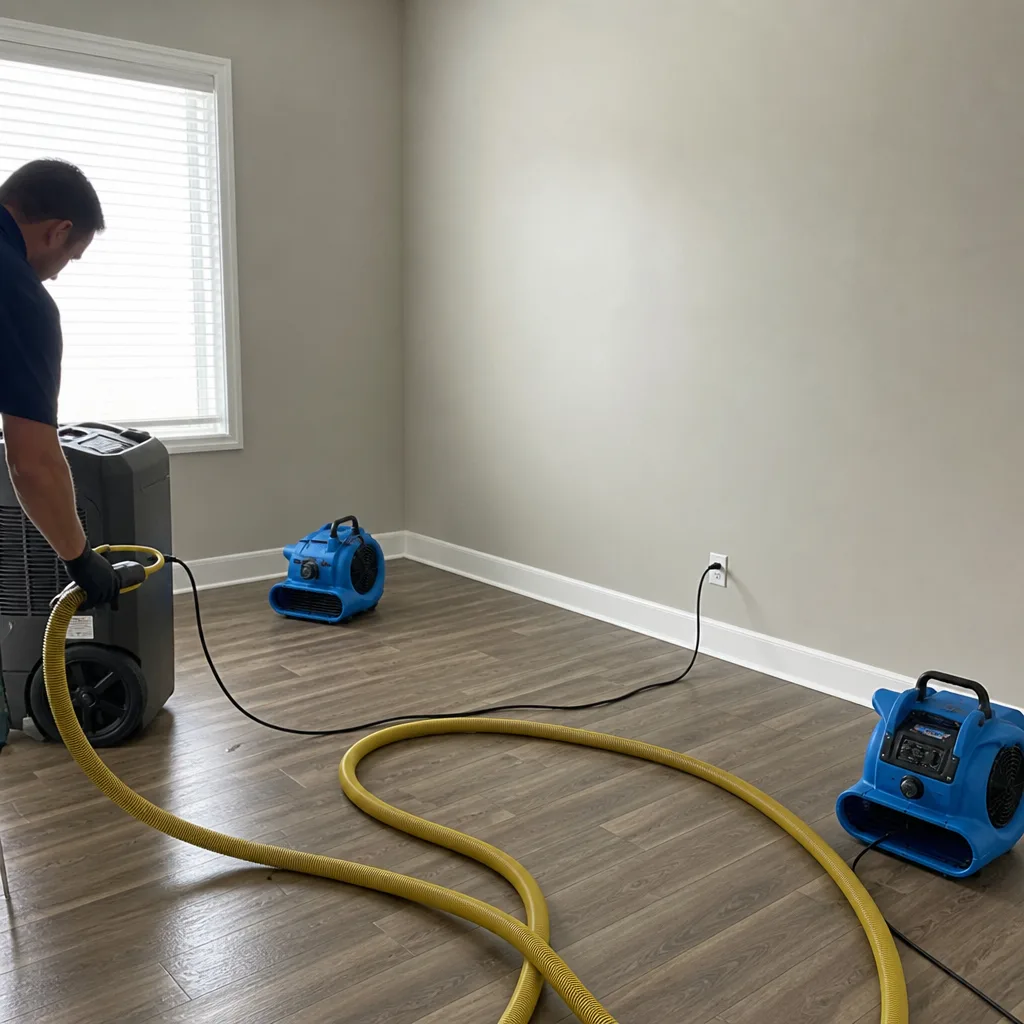 After
After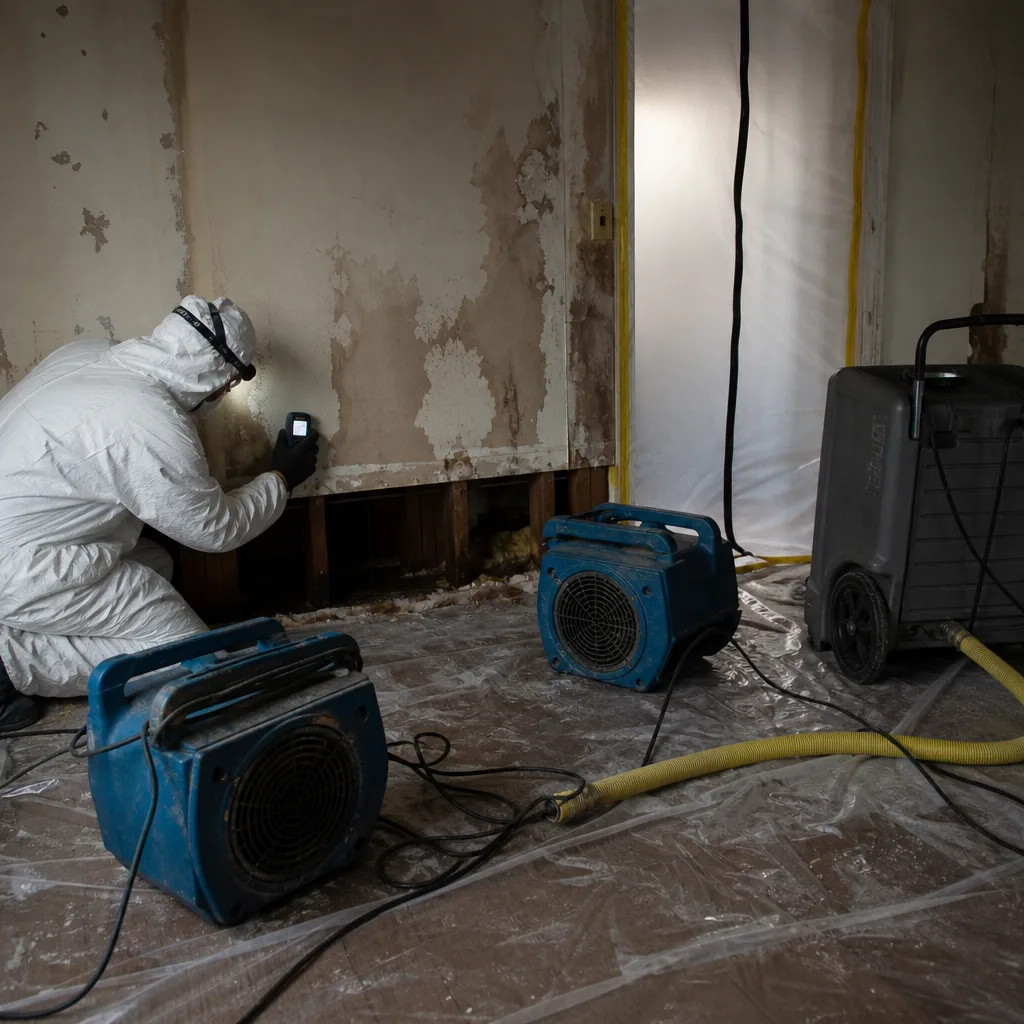 Before
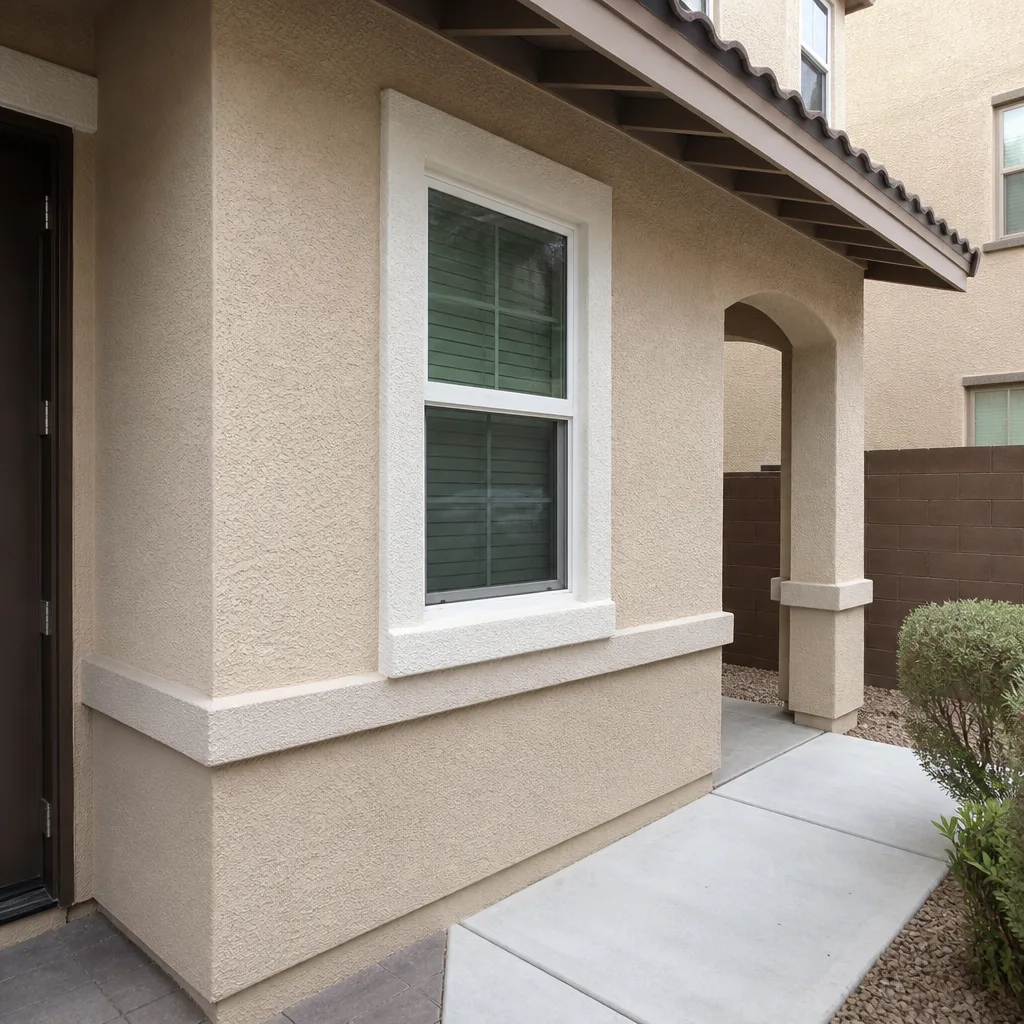 After
After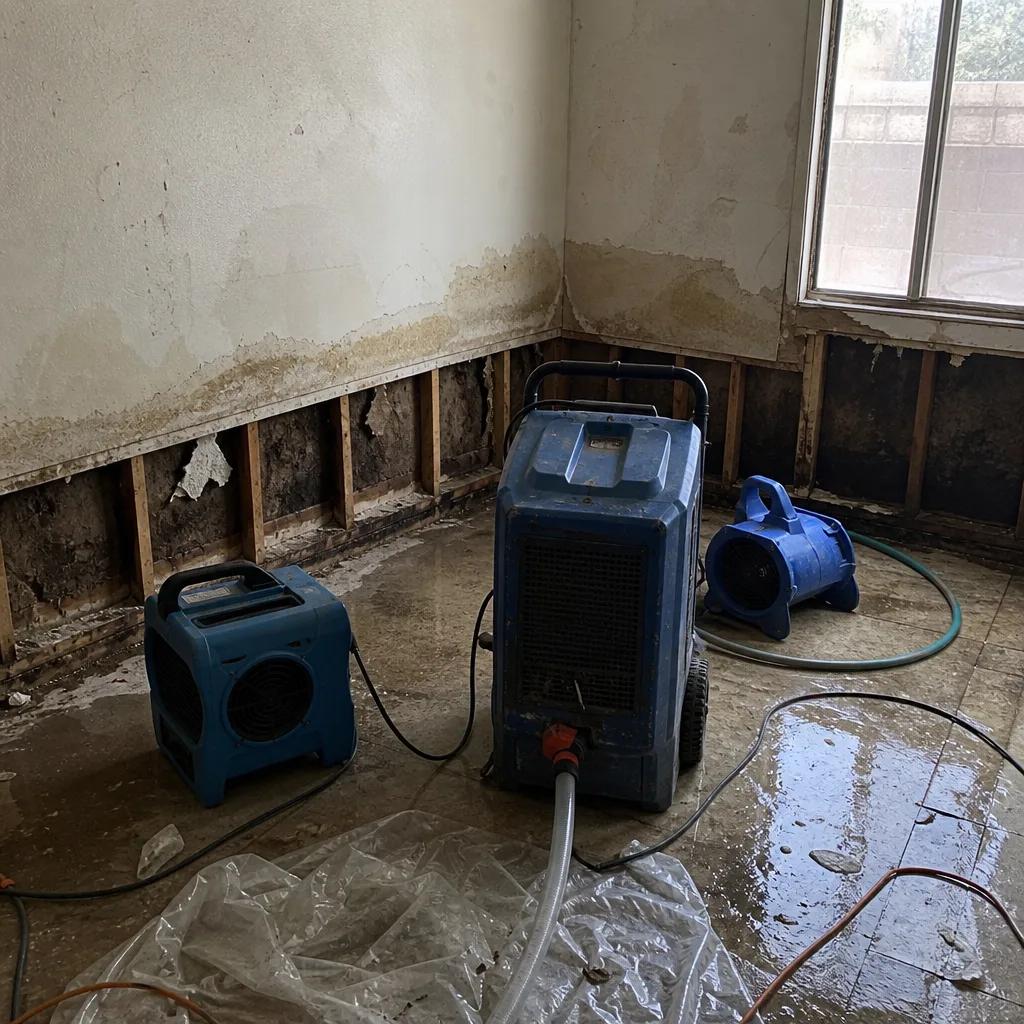 Before
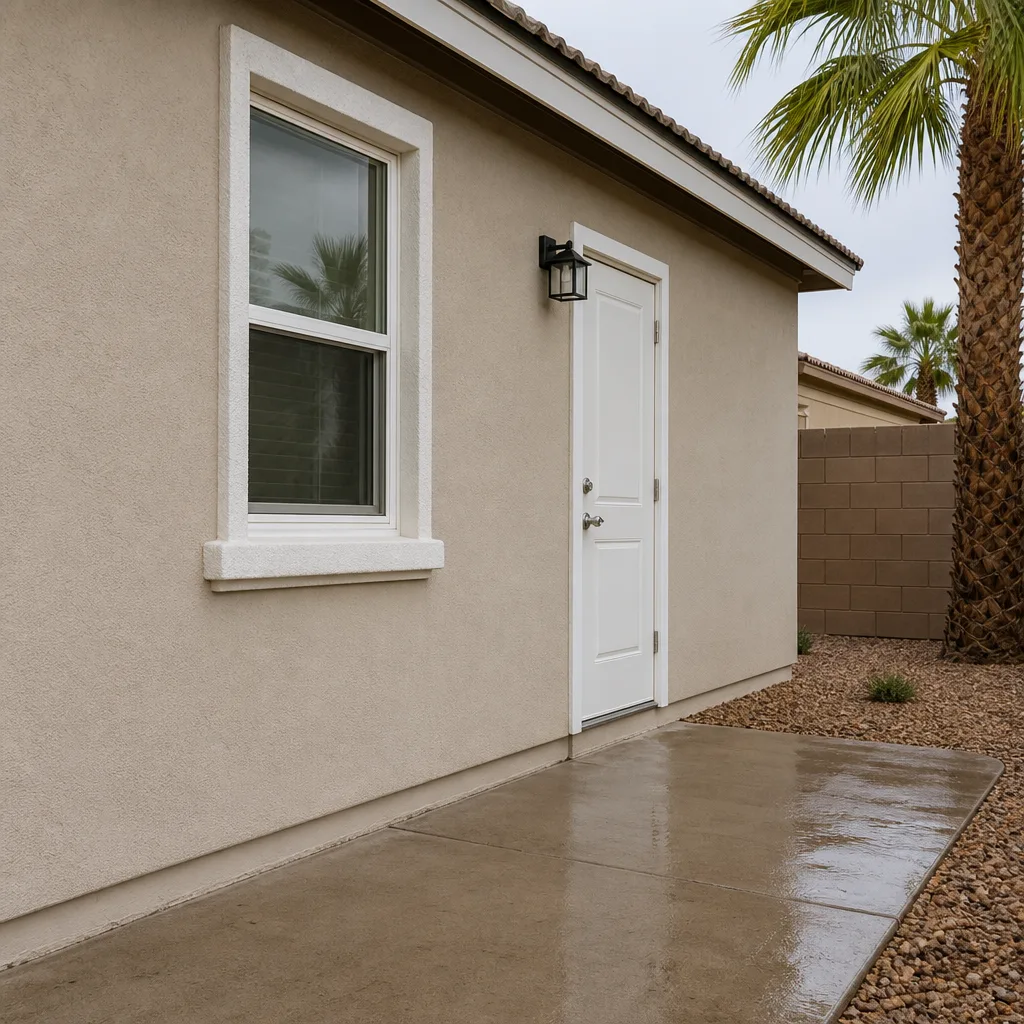 After
AfterDamage Restoration Warning Signs: A Las Vegas Homeowner’s Reference Guide
A moisture reading of 16% in drywall is normal for Las Vegas’s dry climate. A reading of 22% in the same location, three feet from a supply line, is active intrusion - and most homeowners can’t tell the difference because nobody has ever given them the numbers. In a city where relative humidity routinely sits between 15% and 30%, even small water events dry fast on the surface while continuing to damage structure below. This guide gives Las Vegas homeowners the measurable thresholds, location-specific inspection points, and odor profiles that separate cosmetic issues from active damage requiring professional documentation and drying, and points to more guides & resources for ongoing home maintenance.
Quick Answer
Active water damage in a Las Vegas home is confirmed by pin-meter readings above 20% in drywall, 18% in softwood framing, or 5.5% in concrete slab - all measured relative to the city’s typical ambient humidity of 15-30% RH. Visual warning signs include white ceiling rings near HVAC penetrations (condensate, not roof leaks), caliche mineral deposits on slab floors that darken when damp, and stucco efflorescence that reappears within 72 hours of brushing. Musty odor without visible growth indicates active mold colonization when combined with elevated moisture; a dry, dusty odor suggests historical mold with no current moisture driver.
Table of Contents
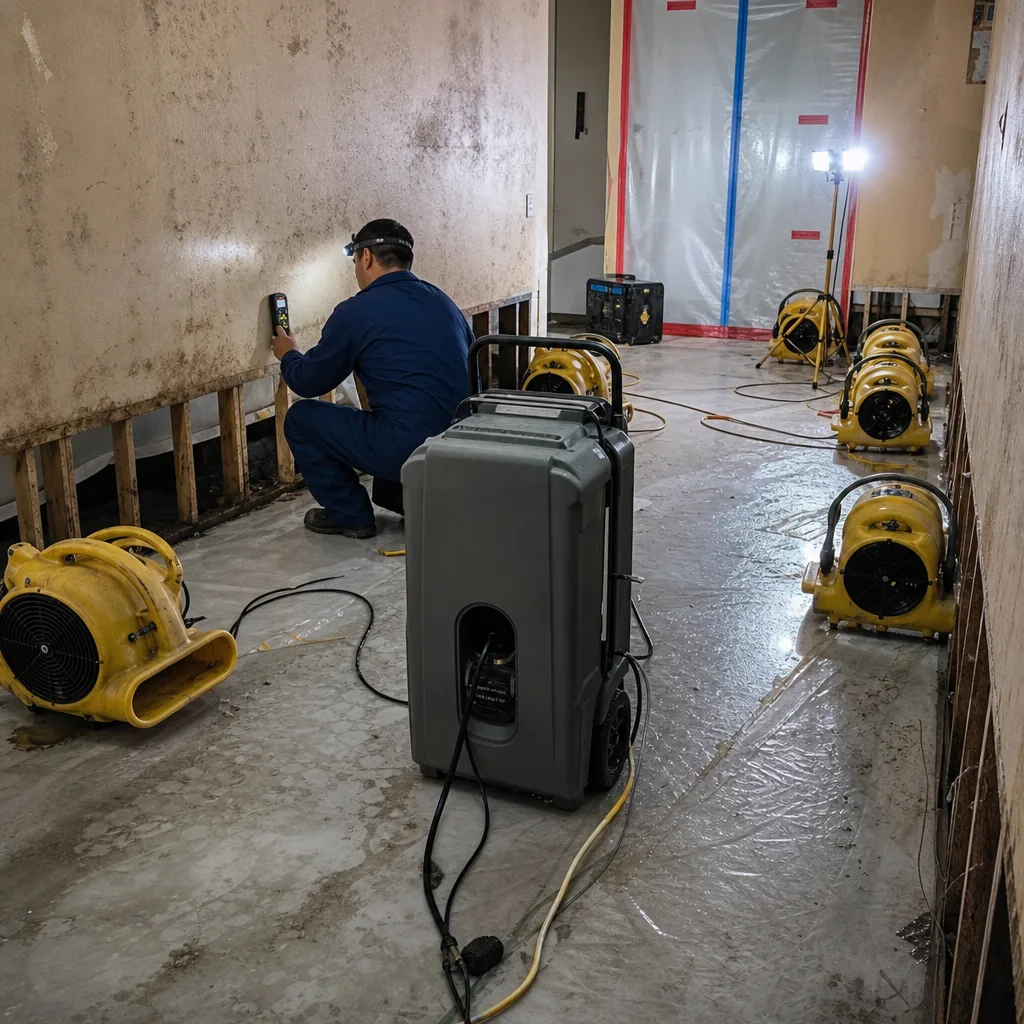
- Moisture Thresholds by Material: The Numbers That Matter in Las Vegas
- Visual Indicators Specific to Las Vegas Construction
- Odor Profiles: Active Mold vs. Historical Mold
- Warning Signs of a Failed or Incomplete Restoration Job
- Room-by-Room Inspection Protocol for Las Vegas Homes
- What Insurance Adjusters Need to See: Documentation Standards
- Common Mistakes to Avoid
- When to Call a Professional
- Frequently Asked Questions
BeforeAfterMoisture Thresholds by Material: The Numbers That Matter in Las Vegas
Every restoration company in Las Vegas owns pin-type moisture meters. Few homeowners know what the readings mean, or why a “normal” reading in Phoenix or Miami would be alarming here - one reason many turn to our How to Hire a Damage Restoration Contractor in Las Vegas: A Step-by-Step Guide before calling anyone out.
Las Vegas’s ambient relative humidity ranges from 15% in June to 30% during winter cold fronts. This matters because moisture meters are calibrated against regional norms. A reading that triggers concern in humid Houston may be unremarkable here, and vice versa.
Drywall and Gypsum Board
In Las Vegas’s dry climate, baseline moisture content in interior drywall typically measures 8-12% with a pin meter. Readings in this range indicate equilibrium with ambient air and require no action.
Elevated moisture begins at 16%. At this level, drywall has absorbed enough water to support slow microbial growth if temperature conditions are favorable, but the material is not actively wet. We flag these readings for monitoring, not immediate demolition.
Active intrusion is confirmed at 20% and above. At 22% measured three feet from a supply line, we document the location with photography and begin psychrometric logging - tracking temperature, relative humidity, and vapor pressure differential to establish the moisture source. Drywall at 22% will not dry to baseline without mechanical intervention; passive evaporation in Las Vegas air is insufficient once the material reaches this saturation.
Softwood Framing (Pine, Fir, Spruce)
Wood framing in Las Vegas homes typically reads 10-14% at equilibrium. This is higher than drywall because wood is hygroscopic - it absorbs and releases moisture more readily.
Elevated: 16-17%. Active intrusion: 18% and above. At 20% in softwood, we expect to find fungal growth within 48-72 hours if temperature exceeds 70°F, which it does in most Las Vegas homes year-round. Our crews document framing moisture with a Delmhorst BD-2100 or equivalent, recording the reading, the depth setting, and the exact stud location on the drying log.
Concrete Slab (Post-Tension and Conventional)
Concrete moisture is measured differently. Pin meters are unreliable on concrete; we use calcium chloride testing or in-situ relative humidity probes per ASTM F2170.
For Las Vegas homeowners without access to lab equipment, a simple indicator is the calcium carbide meter reading, expressed as pounds of moisture per 1,000 square feet in 24 hours. Baseline for habitable space in our climate: below 3.0 lbs. Elevated: 3.0-5.0 lbs. Active moisture transmission: above 5.5 lbs, at which point flooring adhesives fail and vapor emissions damage installed materials.
Many Las Vegas homes built between 2000 and 2010 on caliche-heavy soils show slab readings of 4.0-5.0 lbs seasonally. This is environmental, not intrusion, but it explains why vinyl plank flooring delaminates in Summerlin basements without any plumbing leak. The distinction matters for insurance coverage: environmental moisture is typically excluded, while sudden and accidental water damage is covered.
Key Takeaways: Moisture Thresholds
- Drywall baseline in Las Vegas: 8-12%. Elevated: 16%. Active intrusion: 20%+
- Softwood framing baseline: 10-14%. Elevated: 16-17%. Active intrusion: 18%+
- Concrete slab (calcium chloride): Baseline below 3.0 lbs/1000sf/24hr. Active: 5.5+
- Always measure three feet from suspected sources; moisture migrates laterally in wall cavities
- Document the meter brand, depth setting, and exact location - adjusters require this for claim validation
Visual Indicators Specific to Las Vegas Construction
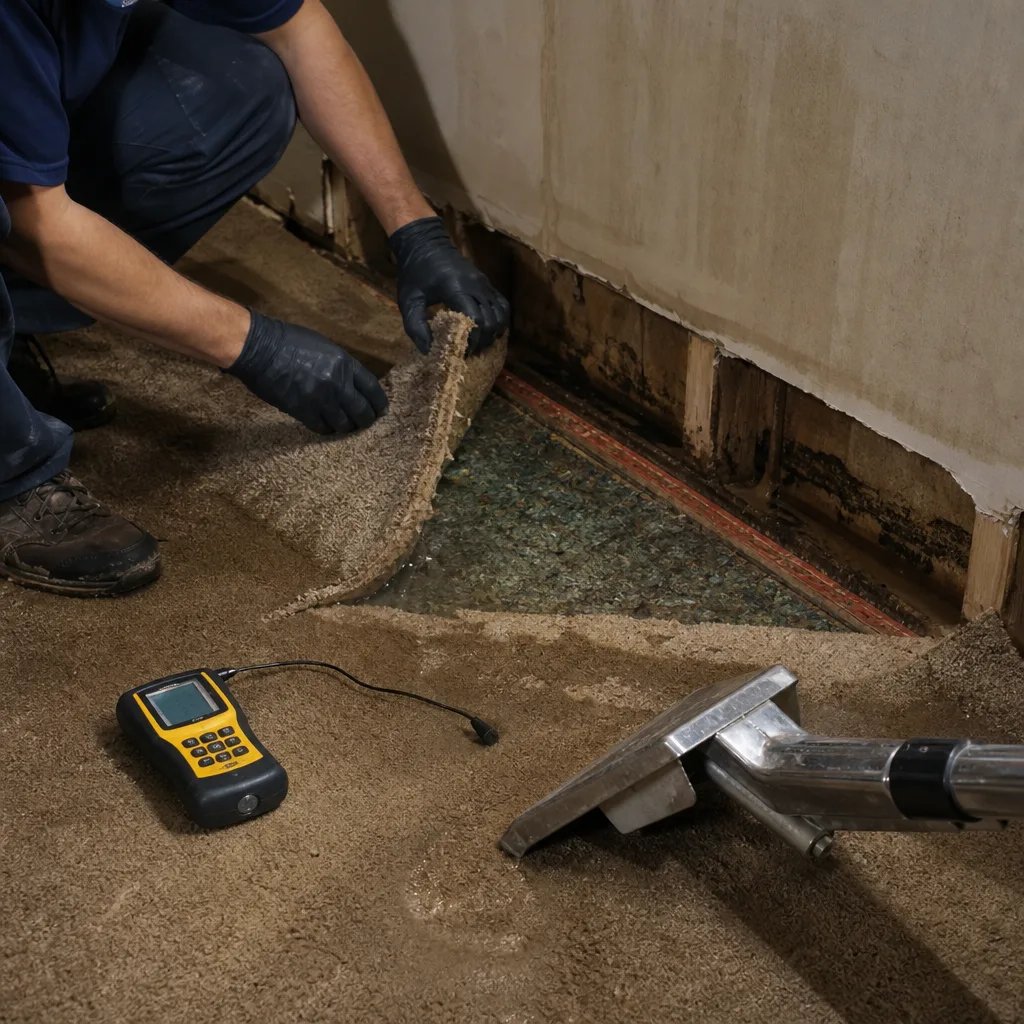
Las Vegas building practices create visual signatures that confuse homeowners and even some contractors. Stucco-over-foam exterior systems, slab-on-grade construction with caliche soils, and evaporative cooling infrastructure all produce patterns that look like water damage but may not be, or that hide active damage in plain sight.
Stucco Efflorescence: Bulk Water vs. Condensation
Efflorescence - the white, powdery deposit on stucco surfaces - is common in Las Vegas. The critical distinction is pattern and recurrence.
Bulk water intrusion from failed flashing or irrigation overspray produces efflorescence in vertical streaks, often below windows, at deck ledger connections, or near ground level. The deposits are thick, crystalline, and reappear within 48-72 hours after brushing. The underlying stucco may sound hollow when tapped, indicating delamination from the foam substrate.
Condensation-driven efflorescence appears as a diffuse, patchy bloom, typically on north-facing walls or shaded courtyards. It correlates with seasonal humidity spikes, not rain events. In Las Vegas, we see this pattern in January and February when cold fronts push RH above 30% and exterior wall cavities experience temperature differentials that produce dew point conditions on the interior face of the stucco.
The test: brush the surface clean, photograph with date stamp, and re-examine in 72 hours. Bulk water intrusion reappears predictably. Condensation bloom may not return for weeks, or until the next weather pattern.
Caliche Deposits vs. Active Moisture Wicking on Slab Floors
Caliche, the calcium carbonate-cemented layer common in Las Vegas basin soils, produces white or gray surface deposits on concrete slabs that homeowners routinely mistake for efflorescence from moisture intrusion.
Caliche deposits are dry, chalky, and do not darken when sprayed with water. They accumulate at slab perimeter joints and where the slab was cut for plumbing rough-in. The pattern follows construction joints, not random fracture lines.
Active moisture wicking produces darker, sometimes brownish staining that darkens visibly when dampened. It follows cracks and fracture patterns, not joints, and may be accompanied by musty odor or flooring adhesive failure. In our experience at Water Damage Restoration in Las Vegas jobs, the most commonly missed active wicking occurs at the slab perimeter in homes with negative grading - where landscape slope directs irrigation water toward the foundation rather than away.
White Ceiling Rings: HVAC Condensate, Not Roof Leaks
In Las Vegas, white or light gray ceiling rings - perfectly circular, 4-12 inches in diameter - are more often HVAC condensate than roof intrusion. The pattern appears directly below evaporative cooler ceiling penetrations, mini-split condensate lines, or poorly insulated flex duct in unconditioned attic space.
Roof leaks in Las Vegas’s minimal rainfall environment are rare and typically produce irregular, spreading stains with brown or yellow tinting from roofing tar and accumulated dust. Condensate rings are cleaner, more geometric, and correlate with cooling season operation - April through October.
The critical check: measure moisture content in the ceiling drywall directly above the ring. Condensate damage often reads 18-22% during active cooling season but dries to baseline within 48 hours of system shutdown. Roof intrusion maintains elevated readings regardless of HVAC operation and typically shows higher moisture at the center of the stain, with a gradient toward the edges. Condensate patterns are more uniform.
Odor Profiles: Active Mold vs. Historical Mold
Smell is the most reliable early indicator of mold colonization, but only if the homeowner understands what the odor signifies. Las Vegas’s dry air complicates this: mold that would be obvious in humid climates can remain localized here, producing detectable odor before visible growth.
The Active Mold Odor Profile
Active mold growth produces a sharp, penetrating mustiness - often described as “wet newspaper” or “damp basement” - that intensifies when the HVAC system cycles on. This occurs because the air handler creates negative pressure in wall cavities, drawing air from interstitial spaces into conditioned rooms.
The active mold odor has three characteristics we document on every Mold Remediation in Las Vegas assessment:
- Intensity variation with temperature: The odor strengthens when the affected area warms above 75°F, as increased metabolic activity in fungal colonies releases more volatile organic compounds (MVOCs).
- Localization: It is detectable in specific rooms or wall sections, not house-wide. A whole-house mustiness suggests HVAC contamination or multiple moisture sources, not a single colonization event.
- Persistence: The odor returns within 24 hours after ventilation, air freshening, or ozone treatment. Masking methods fail because the source is actively producing metabolic byproducts.
When we encounter this profile, we confirm with air sampling and ERMI/HERSTMI-2 dust analysis, then establish containment and negative air pressure before any disturbance. The remediation scope includes not just visible removal but source moisture elimination verified by post-drying moisture logs.
The Historical Mold Odor Profile
Historical mold - colonies that grew during a past moisture event and have been dry for 60+ days - produces a flat, dusty odor without the sharp mustiness of active growth. It may be described as “old attic” or “stored cardboard.” The smell does not intensify with temperature increase and may actually diminish during warm periods as residual volatiles dissipate.
This distinction matters for insurance coverage and remediation scope. Active mold colonization from a covered water loss is typically remediated as part of the claim. Historical mold from long-term humidity or prior uninsured events may be excluded. Our documentation specifies which category applies, with moisture readings and photographic evidence to support the determination.
Historical mold that has been dry for extended periods also presents lower health risk for most occupants, though sensitization remains possible. Remediation scope can be reduced - HEPA vacuuming and sealant encapsulation rather than full removal - when the material is structurally sound and moisture readings confirm sustained dryness.
Warning Signs of a Failed or Incomplete Restoration Job
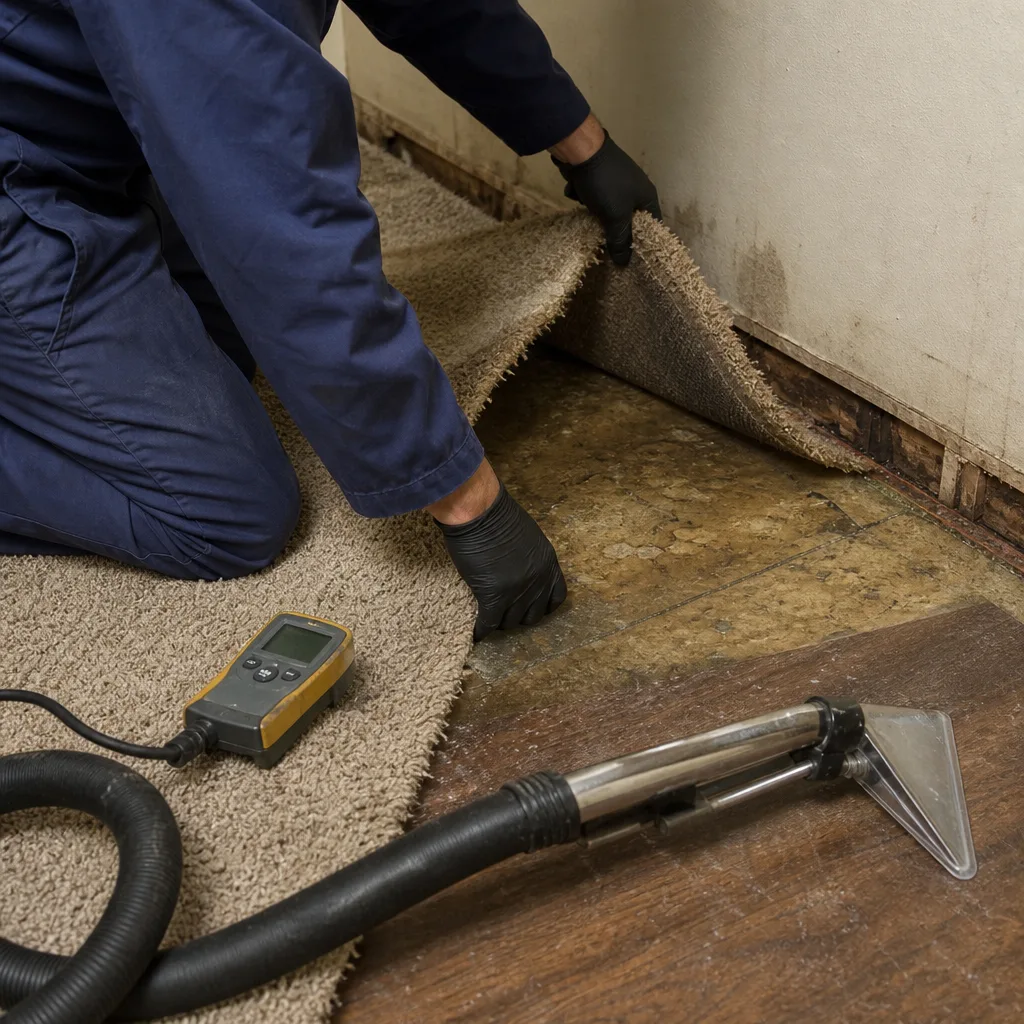
Not all restoration work succeeds. In Las Vegas’s climate, incomplete drying often manifests weeks or months after the original contractor has collected payment and closed the file - a scenario explored in our DIY vs Professional Damage Restoration: The Las Vegas Homeowner’s Decision Guide. Homeowners should know the specific indicators that justify a callback or second opinion.
Persistent Baseboard Discoloration 90+ Days Post-Drying
Baseboards that remain darker than surrounding paint, or that show renewed staining after initial improvement, indicate residual moisture in the bottom plate or wall cavity. In our assessment work, we find this most commonly in homes where the original contractor used air movement alone without dehumidification, or where the drying log shows termination before moisture readings reached baseline.
The test: remove a 2-inch baseboard section and measure the bottom plate with a hammer probe. Readings above 16% in softwood at 90 days confirm failed drying. The remediation requires controlled demolition to expose the cavity, with Injectidry or similar cavity drying systems to reach the interstitial space.
Drywall Surface Texture Changes
Properly dried drywall returns to uniform smoothness. Failed drying produces permanent textural changes: rippling, “alligatoring,” or a chalky surface that accepts paint differently. These changes occur when the paper facing delaminates from the gypsum core due to prolonged moisture exposure, or when secondary mineral deposits alter surface chemistry.
In Las Vegas, we see this pattern frequently in homes where evaporative cooling overflow or washing machine supply line failures were “dried” with household fans rather than professional-grade equipment. The surface feels dry to touch; the core remains compromised.
Door Frame Racking at 60 Days Post-Event
Interior doors that stick, swing open, or show uneven reveal gaps 60 days after a water event indicate structural movement in the surrounding framing. Wood that was not fully dried continues to shrink as residual moisture equilibrates, distorting the rough opening and transferring stress to the installed door.
This is not cosmetic. It signals that the wall cavity contains moisture at levels that support fungal growth, even if no mold is yet visible. The correct response is moisture mapping of the entire affected wall run, not just planing the door to fit.
Our Documentation-First Approach to Failed Restoration
At DryMark Restoration Las Vegas home, we provide a Free Second Opinion on any competitor’s written estimate or completed work. Our assessment includes full moisture mapping with documented readings, photographic record, and a written scope with pricing before any work begins - Haven Standard, Clause 1. The 365-Day Done Right Promise applies to all remediation and reconstruction, with daily drying logs that become part of your insurance file.
Room-by-Room Inspection Protocol for Las Vegas Homes
Most homeowner water damage inspections focus on obvious locations: under sinks, around toilets, near water heaters. In Las Vegas’s specific construction environment, the highest-risk locations are often the least examined - which is why Seasonal Damage Restoration Care for Las Vegas: Year-Round Homeowner’s Guide emphasizes checking these seasonal vulnerability points.
Kitchen
Refrigerator supply line: Braided stainless lines fail at the compression fitting, not the hose body. Check for greenish corrosion on the brass fitting and moisture in the adjacent cabinet toe-kick with a pin meter. Readings above 16% in the toe-kick particleboard indicate slow leak sufficient to damage the subfloor.
Dishwasher drain loop: Las Vegas code requires an air gap or high loop, but many retrofits omit this. Water backs into the sink cabinet during drain cycle, pooling in the cabinet base. The particleboard shelf above the dishwasher - rarely examined - often shows the first swelling.
Laundry Room
Washing machine drain standpipe: In Las Vegas’s hard water environment, calcium buildup reduces standpipe diameter and increases overflow frequency during high-volume drain cycles. The overflow runs down the wall cavity, emerging as baseboard staining in the adjacent room before any laundry room symptoms appear.
Water softener: The brine tank discharge line is a pressurized failure point. Check the floor drain connection for moisture; softener cabinets with solid bottoms trap overflow, producing hidden subfloor damage. We find this pattern regularly in Summerlin and Henderson homes with whole-house softeners installed in garage utility closets.
Bathrooms
Shower pan weep holes: Tile showers without visible leaks may have clogged weep holes in the drain assembly, forcing water into the pan bed and surrounding walls. The indicator is grout discoloration at the shower base perimeter, or tiles that sound “drummy” when tapped - hollow from debonded thinset.
Exhaust duct condensation: Las Vegas’s dry climate leads builders to undersize bathroom exhaust ducts. In winter, warm moist air condenses in unconditioned attic runs, dripping back through the fan housing. The ceiling stain appears directly below the fan, often misdiagnosed as roof leak.
Living Areas and Bedrooms
Evaporative cooler ceiling penetrations: Swamp coolers are common in older Las Vegas homes and produce seasonal condensate patterns. Inspect the ceiling patch around the cooler duct for texture changes, and measure moisture during first seasonal startup. The transition from evaporative to refrigerated cooling (or vice versa) stresses these patches.
Slab perimeter at exterior walls: In homes with negative grading or irrigation spray against stucco, moisture wicks through the slab edge. Carpet tack strips rust; baseboards swell from the bottom; flooring gaps appear at exterior walls first. Measure the slab with a pin meter set to wood scale - concrete readings above 5% at the perimeter indicate active wicking.
Garage and Utility Spaces
Water heater T&P relief valve: Temperature and pressure relief valves discharge to the garage floor or an exterior wall. In Las Vegas, hard water causes valve seat corrosion and premature discharge. The valve may weep continuously at 1-2 gallons per day, sufficient to saturate a garage slab perimeter before any dramatic failure.
HVAC condensate drain: Primary drains clog with algae; secondary drains (where installed) terminate conspicuously. A dripping secondary drain is not a minor issue - it indicates primary drain failure, and the catch pan is not designed for continuous operation. Pan overflow damages ceiling below within 48 hours.
Exterior
Irrigation backflow preventer: Annual testing is required, but many Las Vegas homeowners defer. A failed preventer allows irrigation water into the potable supply and can pressurize exterior hose bibs, producing hidden leaks in wall cavities. The indicator is unexplained moisture at interior walls opposite hose bib locations.
Stucco weep screed: The weep screed at slab level must remain clear of soil and hardscape. Buried screeds trap moisture in the stucco foam system, producing efflorescence and, in severe cases, structural damage to the framing behind. This is particularly common in homes where landscape elevation has been raised for planting beds.
What Insurance Adjusters Need to See: Documentation Standards
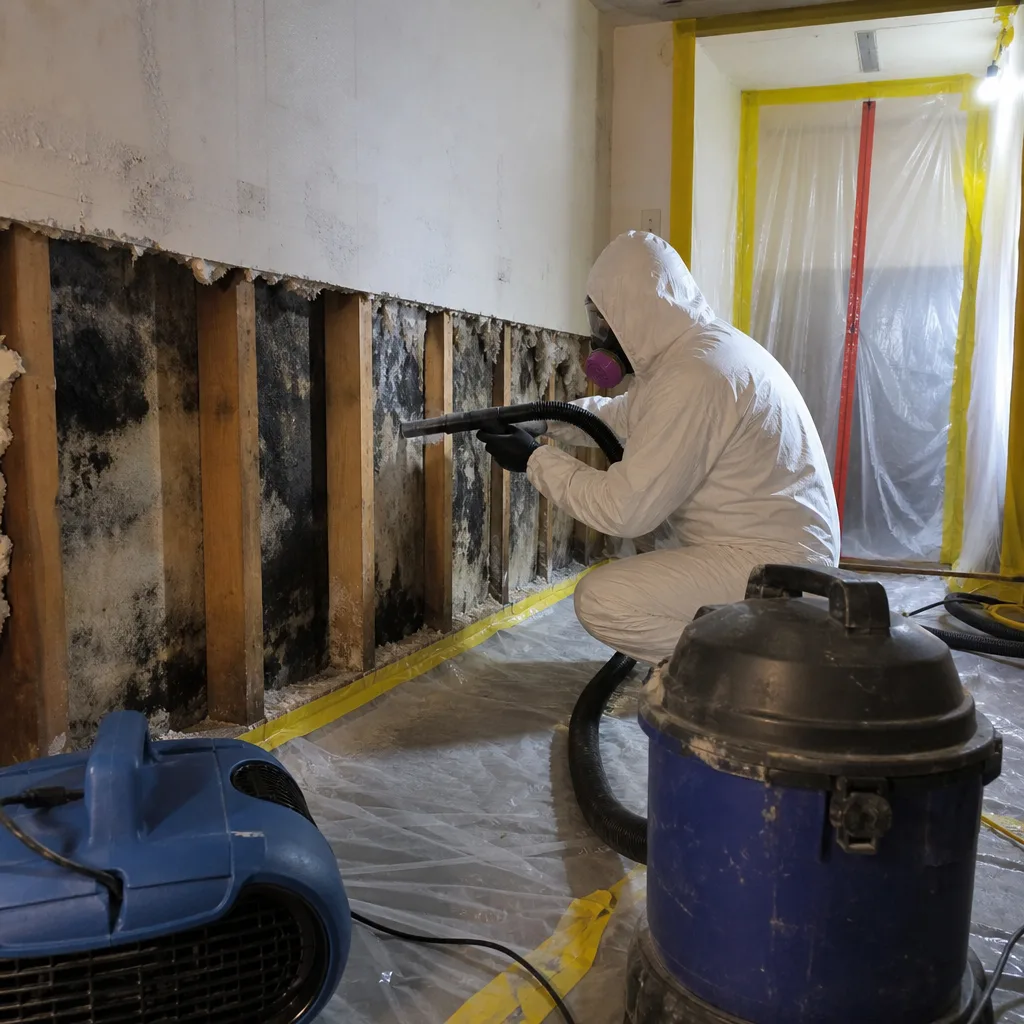
The documentation gap is why restoration invoices get challenged. Alicia Brennan founded Back to Dry in 2011 after years as a claims adjuster watching homeowners lose legitimate coverage because the restoration contractor’s records were insufficient to prove cause, scope, or completion.
Every Fire & Smoke Damage Restoration in Las Vegas or water damage job we handle produces four documents that adjusters expect:
- Photo record on every visit: Date-stamped, geotagged, showing moisture meter readings in frame, equipment placement, and material condition. Not selected “best” photos - every photo, organized by room and visit sequence.
- Daily drying log with psychrometric data: Temperature, relative humidity, and specific humidity readings at multiple room locations, plus equipment runtime hours and dehumidifier pint removal (measured or calculated). This proves the drying was proceeding to plan, or justifies scope changes if conditions deviated.
- Written scope with line-item pricing before work begins: Haven Standard, Clause 1. No exceptions. The scope defines what will be done, what materials will be used, and what the total price will be. Additions require written change orders with homeowner signature.
- Post-drying moisture verification: Final readings at all original elevated locations, plus representative baseline readings in unaffected areas for comparison. We use the same meter, same depth setting, same technique as the initial readings to ensure comparability.
These documents transform a restoration invoice from a demand into evidence. In 12,000+ homes restored since 2011, our documentation-first approach has produced the daily drying logs that turn restoration invoices into payable insurance claims without the back-and-forth that delays homeowner recovery.
Equipment deployed includes professional-grade drying systems from XPOWER and B-Air, with all work documented to IICRC standards. The specific equipment selection - axial air movers, low-grain refrigerant dehumidifiers, or desiccant systems - is logged with justification based on the psychrometric data from each job.
Common Mistakes to Avoid
- Assuming surface dryness means complete drying: In Las Vegas’s arid climate, surface materials dry within 24-48 hours while wall cavities retain damaging moisture. Always verify with pin-meter readings at depth, not touch or visual inspection.
- Misidentifying caliche deposits as active moisture: The white deposits common on Las Vegas slab floors are often soil minerals, not efflorescence. Spray with water - caliche stays light; active moisture wicking darkens visibly.
- Ignoring seasonal HVAC condensate patterns: White ceiling rings during cooling season are typically condensate, not roof leaks. The repair is insulation and drainage, not roof replacement, but both require prompt action to prevent secondary damage.
- Accepting verbal scope or pricing: Haven Standard, Clause 1 exists because verbal agreements produce disputes. Every restoration job, emergency or scheduled, deserves a written price before work starts.
- Delaying assessment after partial DIY drying: Household fans and wet/dry vacuums remove visible water but rarely achieve the vapor pressure differential needed for structural drying. Delayed professional assessment often reveals advanced damage that could have been contained.
- Failing to document pre-existing conditions: Insurance adjusters deny claims for damage they attribute to prior events. Photograph all affected areas before any disturbance, including dated close-ups of stains, textures, and material conditions.
- Overlooking evaporative cooler penetrations in spring startup: The seasonal transition to swamp cooler operation is a peak failure period in older Las Vegas homes. Inspect ceiling patches and duct connections during first use, not after stains appear.
When to Call a Professional
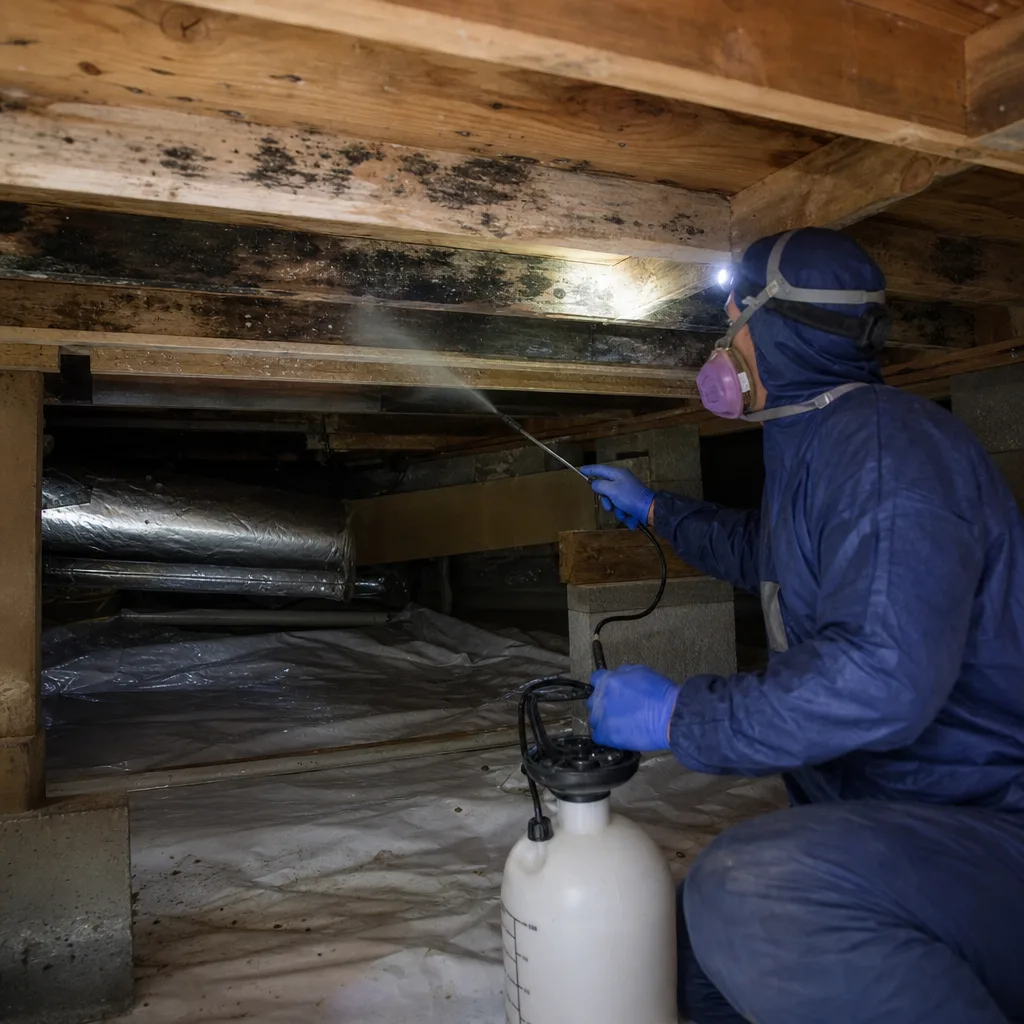
Call for professional assessment when pin-meter readings exceed the thresholds in this guide, when odor persists beyond 48 hours after ventilation, or when any visual indicator reappears within 72 hours of cleaning. These are not emergencies in every case, but they are points where homeowner intervention becomes insufficient and documentation becomes necessary for insurance protection.
For active water flow, sewage backup, or electrical hazard from water contact, speed matters. Our live dispatch answers every call without voicemail trees, 24 hours a day, 7 days a week. Background-checked, uniformed technicians arrive with licensed, insured status and the equipment to begin documentation and containment immediately.
DryMark Restoration Las Vegas offers free estimates in Las Vegas - call (702) 483-7932. Every estimate includes moisture mapping, photo documentation, and a written scope with pricing before any work begins, under Haven Standard, Clause 1. The 365-Day Done Right Promise applies to all work, with daily drying logs and a documented photo record on every visit.
Frequently Asked Questions
Reputable restoration companies in Las Vegas provide initial assessments at no charge, with moisture mapping and photo documentation included. At DryMark Restoration Las Vegas, estimates are always free and include a written scope with line-item pricing before any work begins - Haven Standard, Clause 1. Call (702) 483-7932 to schedule.
Coverage depends on whether the mold resulted from a sudden, accidental water event or from long-term maintenance neglect. Most policies cover mold from burst pipes or appliance failures but exclude mold from slow leaks over weeks or months. Documentation is critical: moisture readings that establish a recent event, photo records showing progression, and a written scope that distinguishes active from historical damage all support claim approval. We coordinate directly with adjusters and provide the daily drying logs that demonstrate cause and timeline.
Live dispatch with no voicemail trees means your call is answered by a person who can deploy a crew immediately for emergencies. For non-emergency assessments, same-day or next-day scheduling is typical in the Las Vegas metro area. The critical factor is not arrival speed but documentation quality upon arrival - moisture mapping, photo record, and written scope before any work begins.
Surface cleaning of visible mold without addressing the moisture source and verifying airborne spore levels is incomplete remediation that typically fails within 90 days. Professional remediation includes containment with negative air pressure, HEPA filtration, source moisture elimination verified by drying logs, and post-remediation verification sampling. For areas under 10 square feet with confirmed moisture source eliminated, homeowner cleaning with appropriate PPE may suffice - but verification sampling remains advisable for insurance documentation.
Materials in Las Vegas equilibrate to lower ambient moisture levels - 15-30% relative humidity versus 60-80% in coastal or southeastern regions. A drywall reading of 18% might be unremarkable in Houston but indicates significant moisture absorption here, where baseline is 8-12%. Restoration contractors must calibrate equipment and drying targets to regional conditions; our psychrometric data and vapor pressure differential calculations account for Las Vegas’s specific climate profile.
Document current conditions with dated photographs and moisture readings if you have access to a meter. Then request a Free Second Opinion - bring any written estimates, invoices, or drying logs from the original contractor. At DryMark Restoration Las Vegas, we review competitor documentation at no charge and provide a written assessment of whether additional work is needed, with full moisture mapping and photo documentation to support insurance reconsideration if applicable.
The Bottom Line
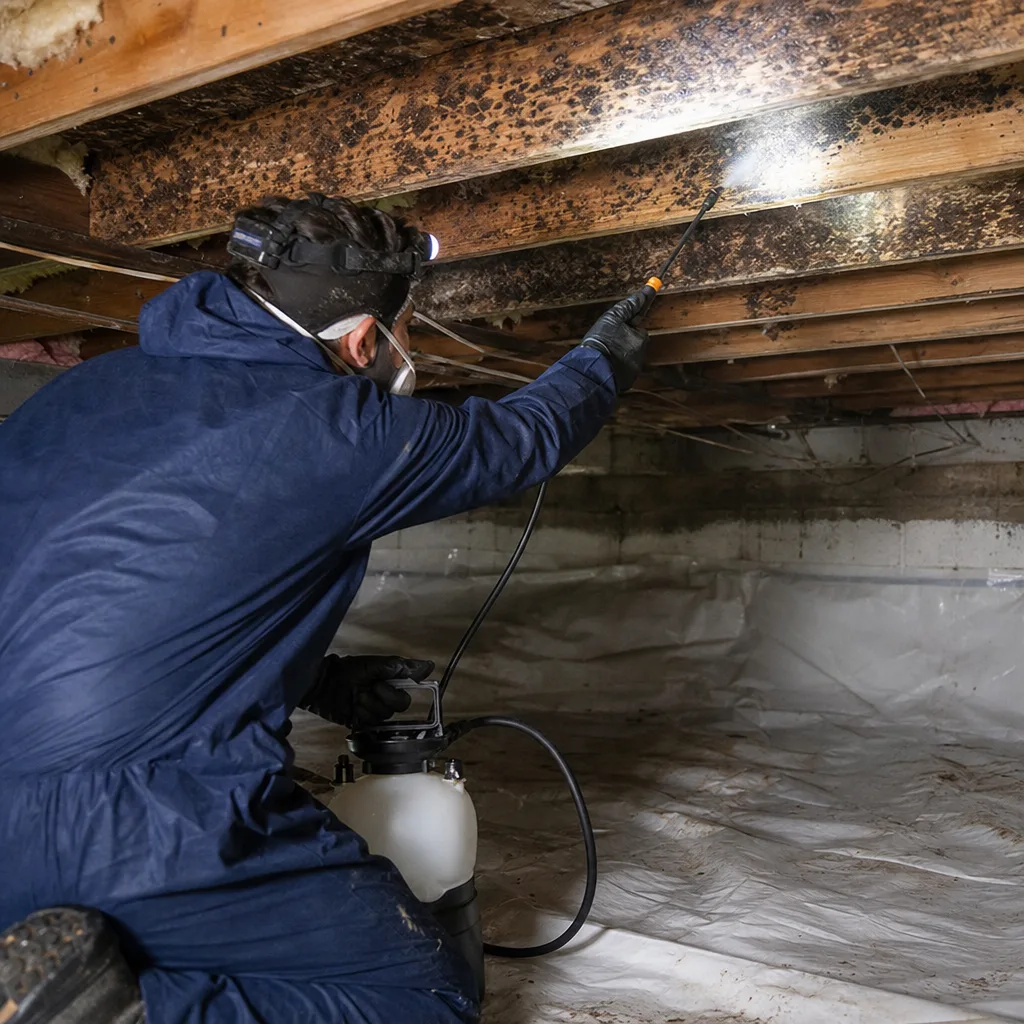
Las Vegas homeowners need more than a checklist of stains and smells. They need the moisture thresholds that distinguish normal from elevated from active intrusion, the visual patterns specific to desert construction, and the odor profiles that guide remediation scope. This guide provides those measurements - 20% drywall, 18% softwood, 5.5 lbs concrete - along with the inspection points most homeowners never examine until damage is advanced. Documentation transforms restoration from a disputed expense into a payable claim. Every job we handle at DryMark Restoration Las Vegas includes a written price before work begins, a photo record on every visit, and the daily drying logs that satisfy adjuster review - the documentation-first standard Alicia Brennan established in 2011 and upholds today under The Haven Standard.
Written by Alicia Brennan, Owner at DryMark Restoration Las Vegas, serving Las Vegas since 2011.