
Last updated September 23, 2026
Free visual inspection and a written scope of work before any mitigation begins - photos, moisture readings, and drying logs go in your claim file
The scope we write is the scope we bill. Anything new gets shown to you, in writing, before we touch it.
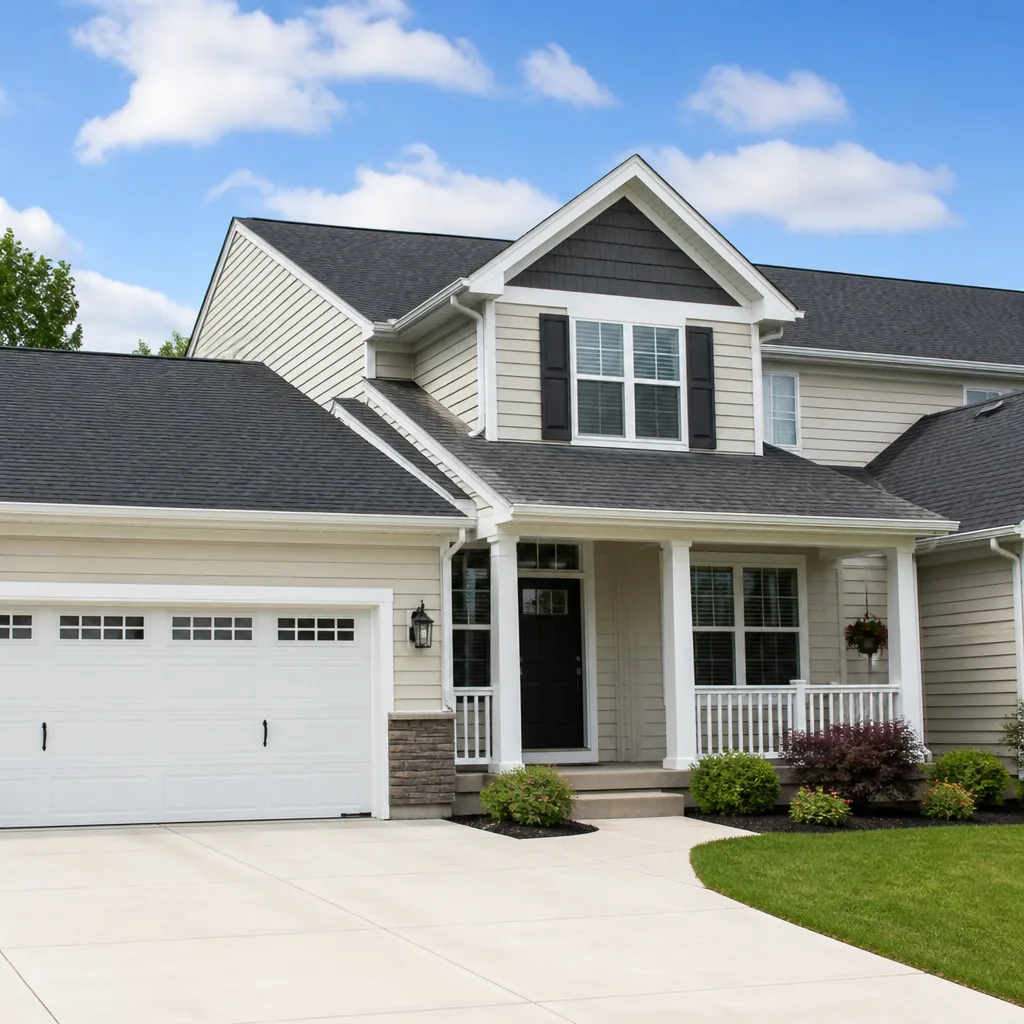
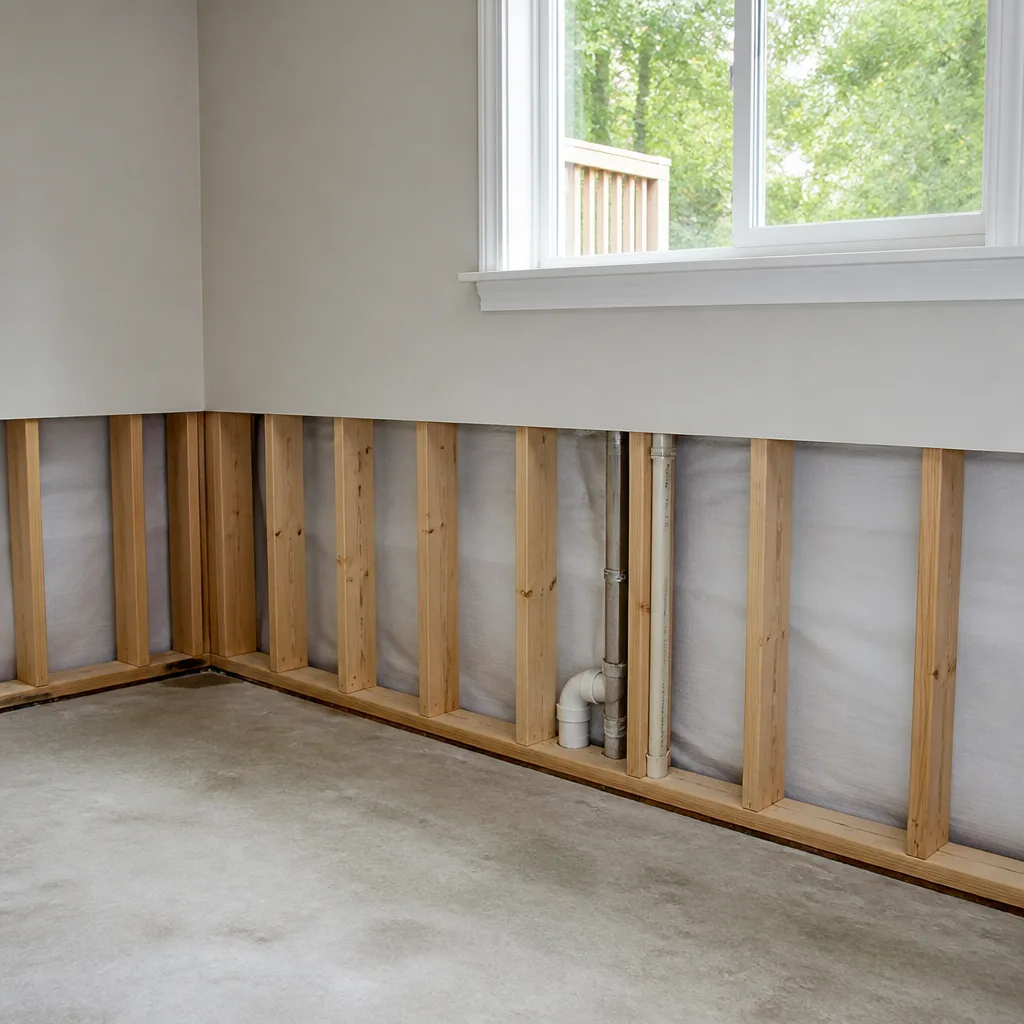
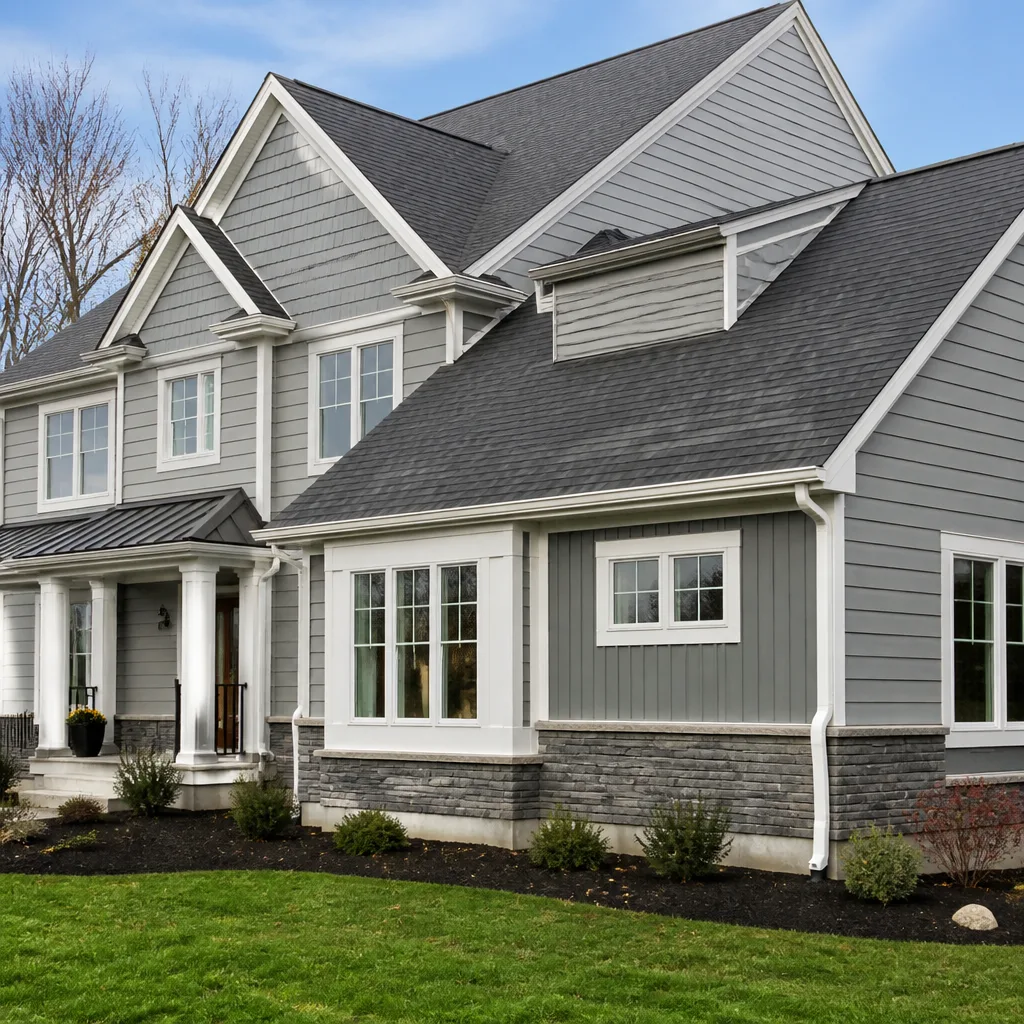
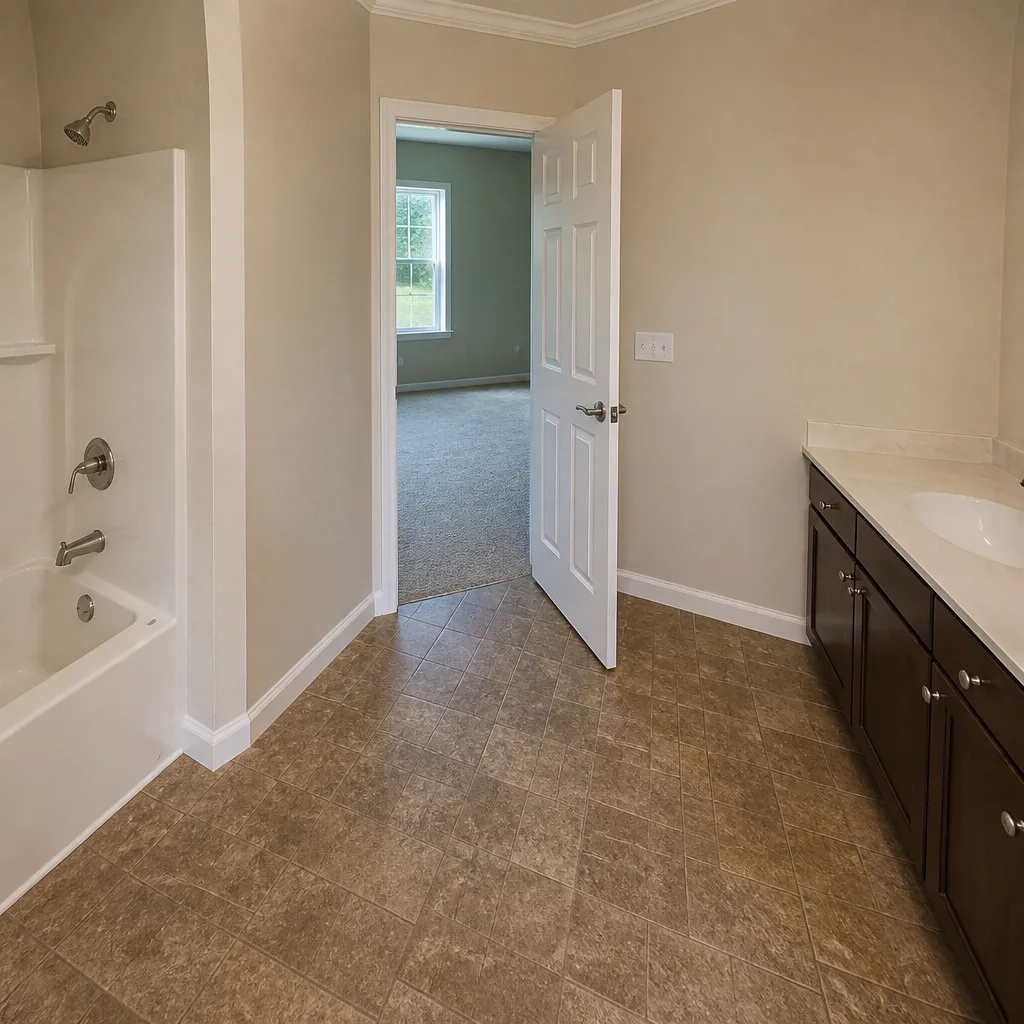
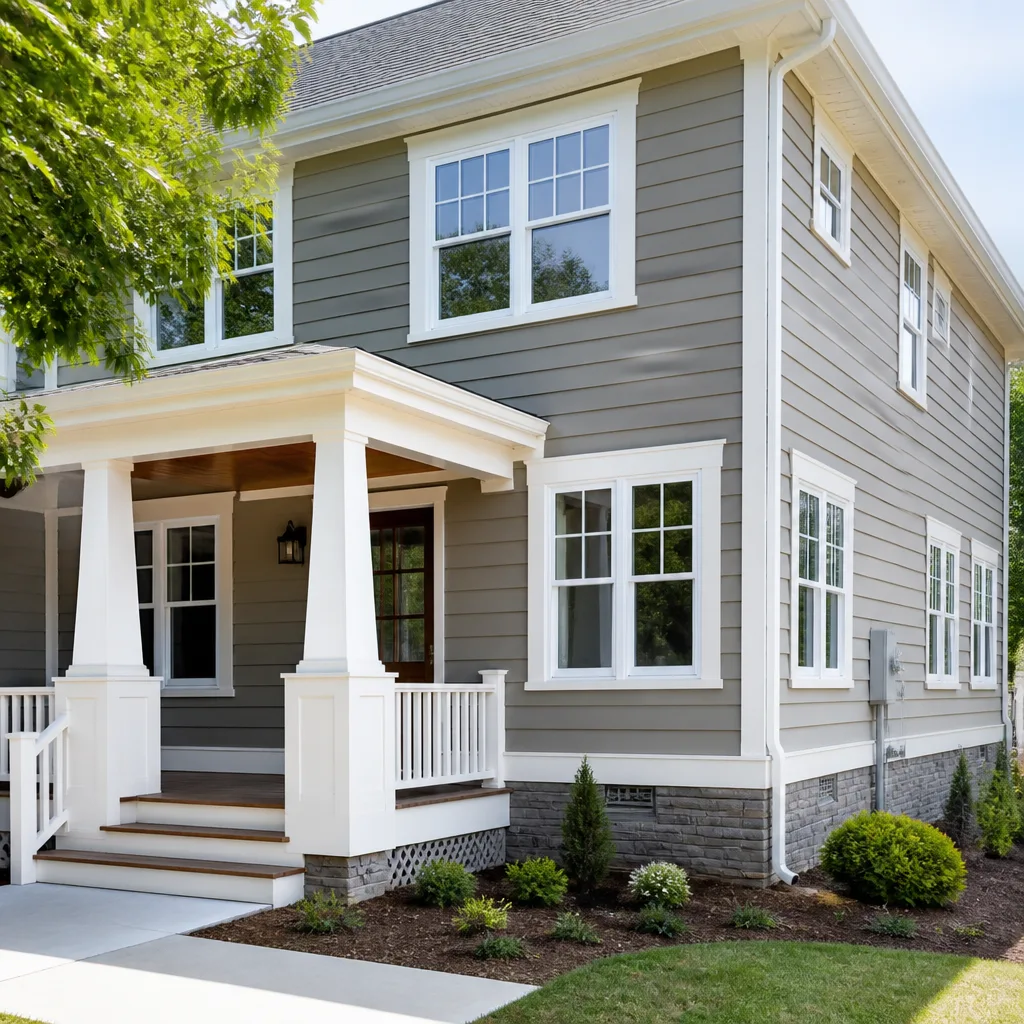
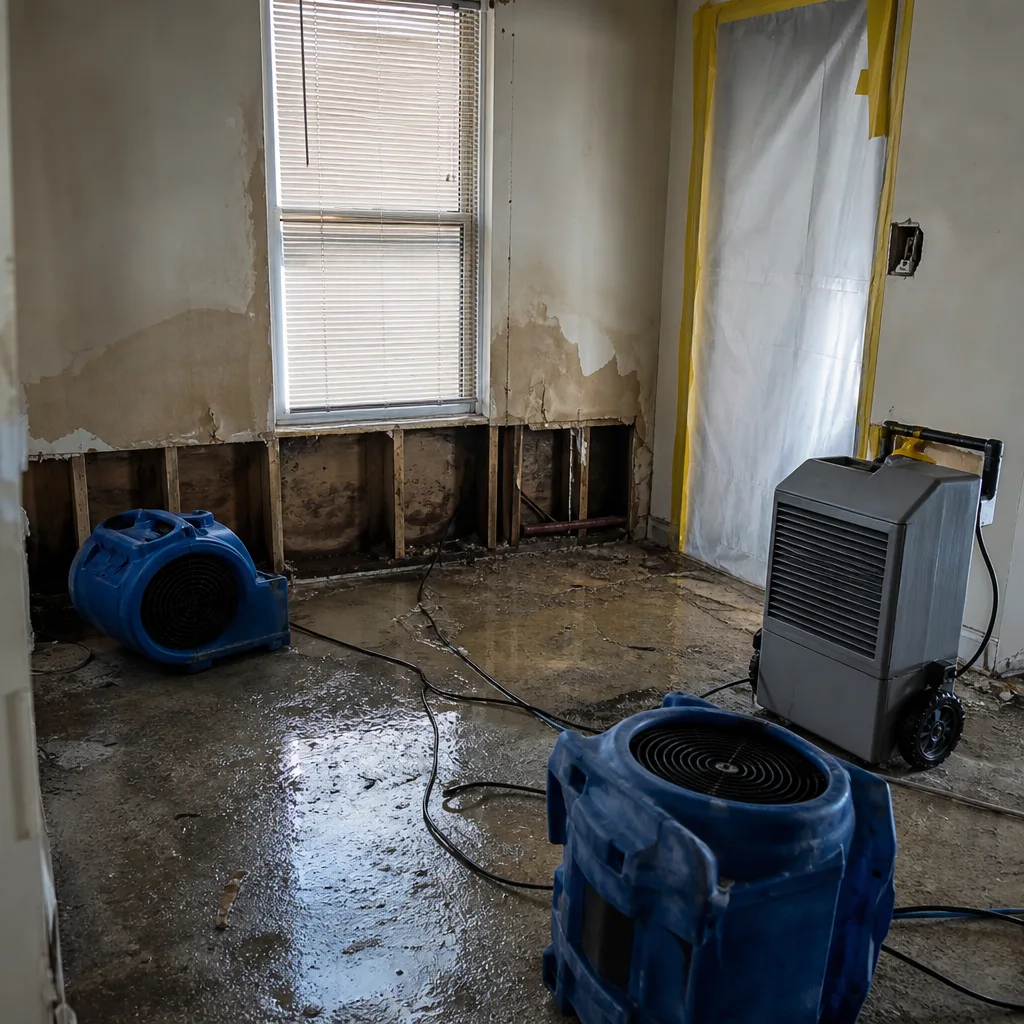 Before
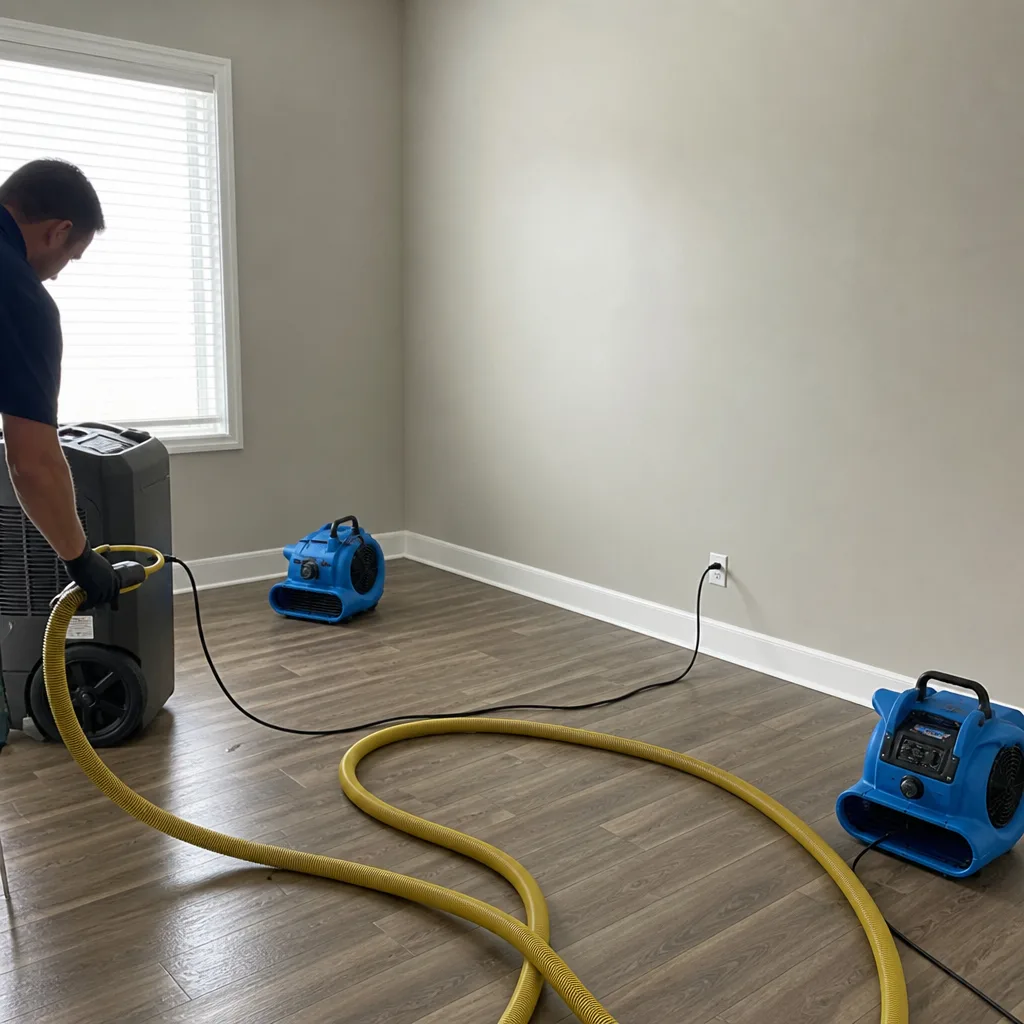 After
After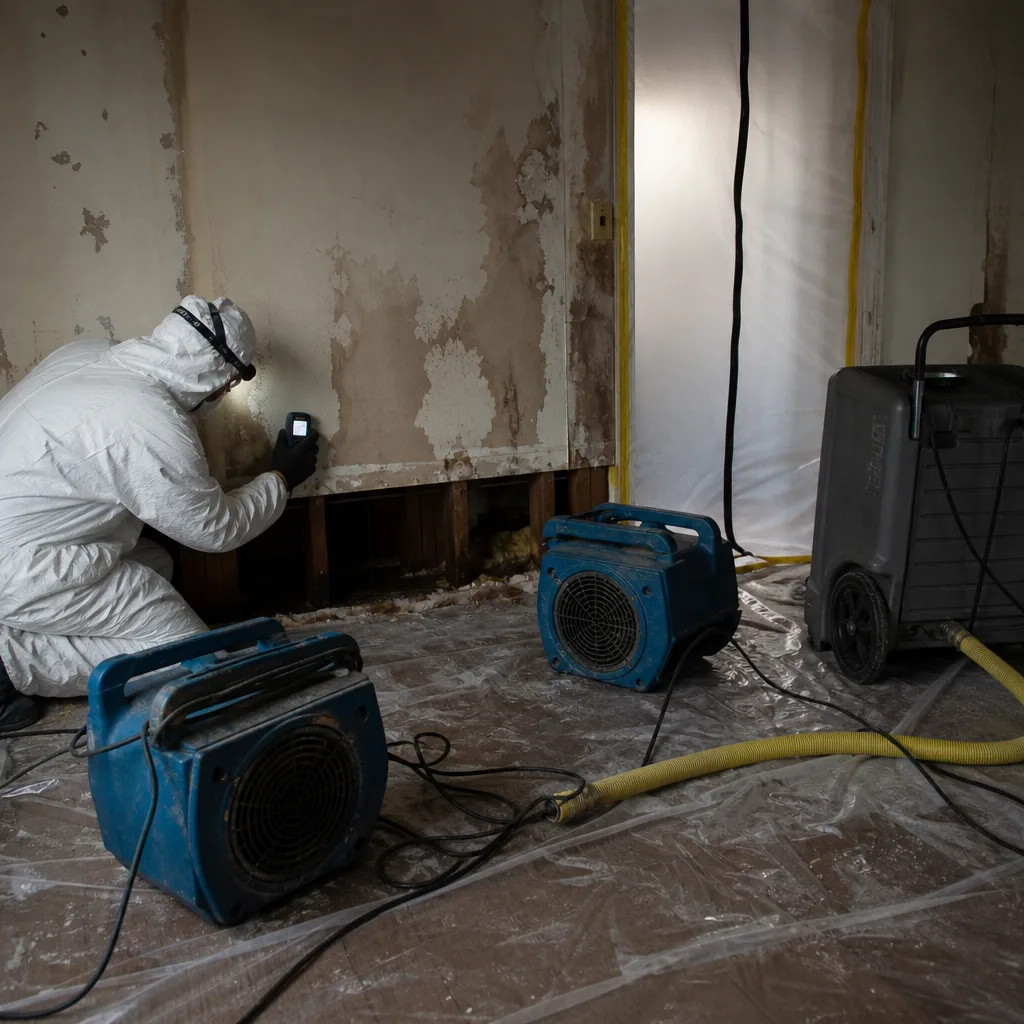 Before
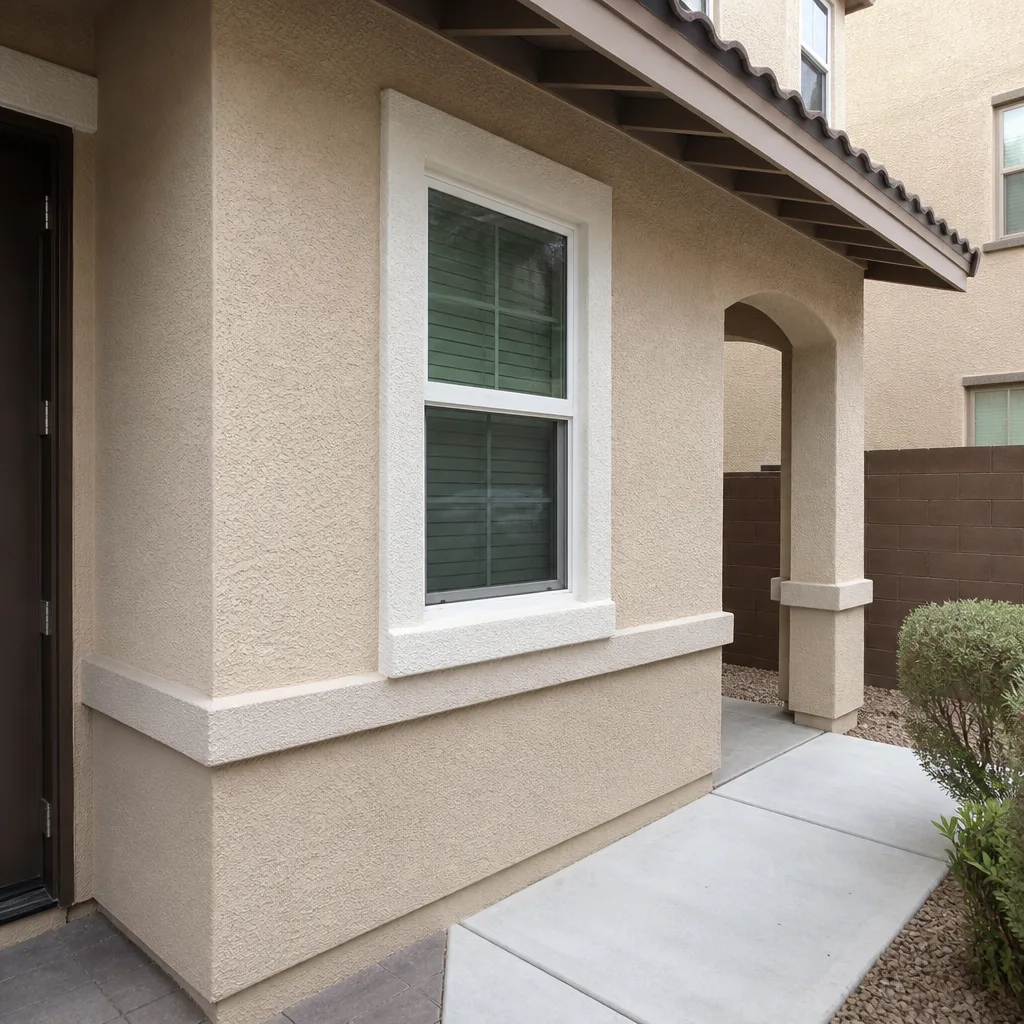 After
After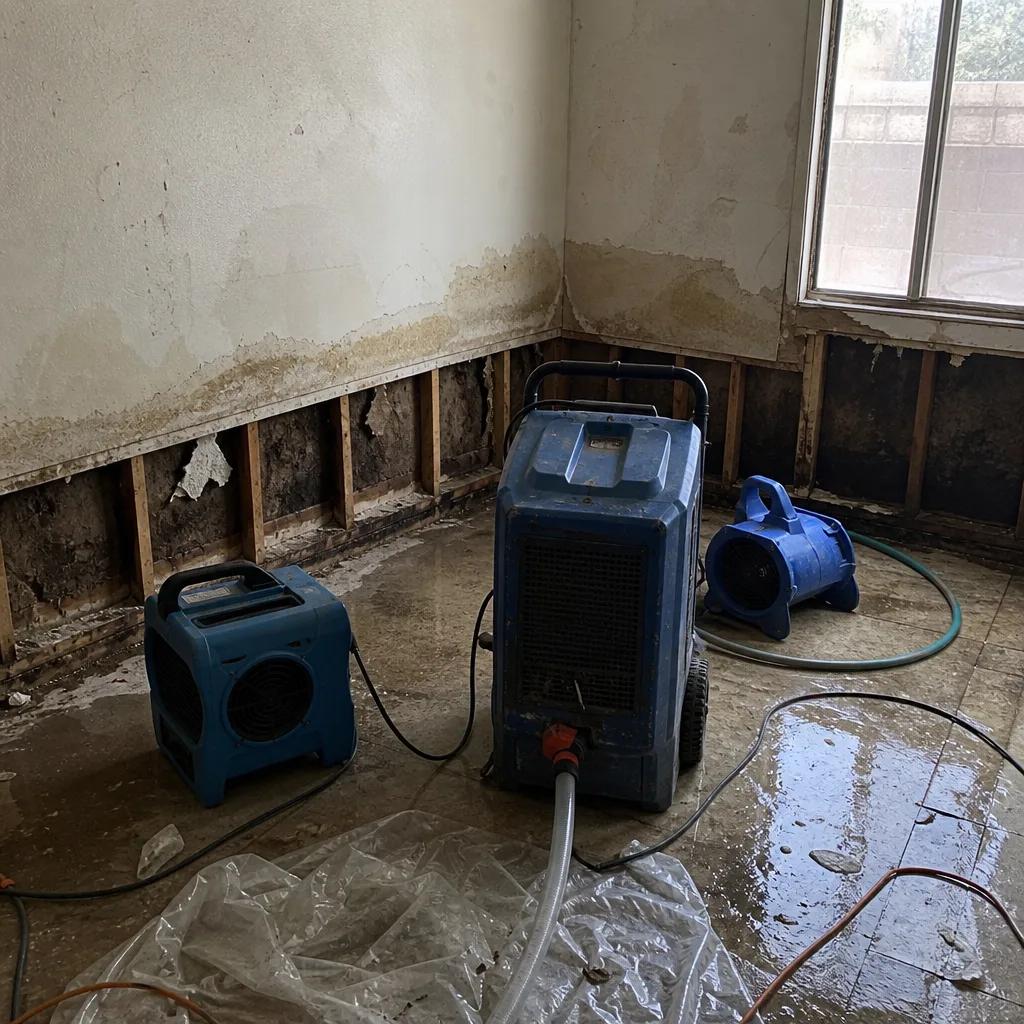 Before
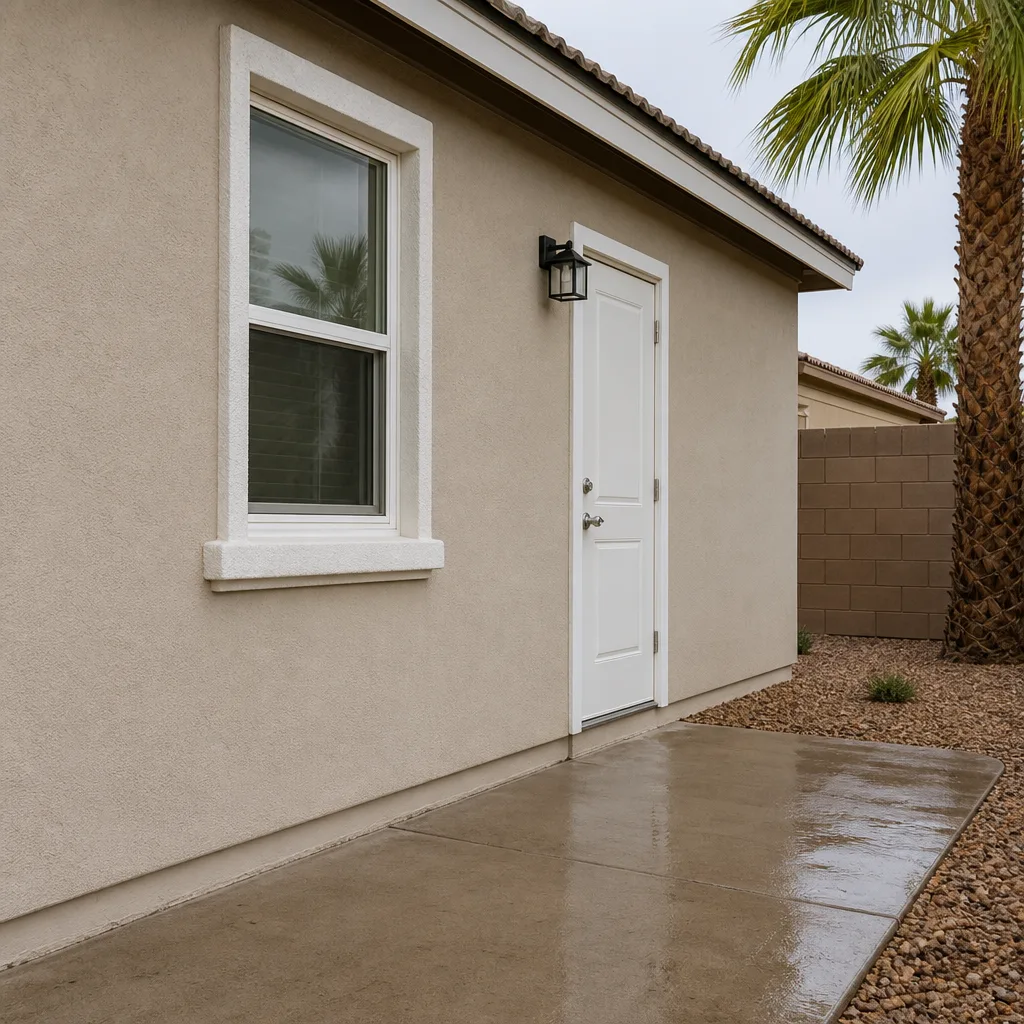 After
AfterThe Complete Guide to Damage Restoration in Las Vegas
A Clark County homeowner finished her kitchen renovation in Summerlin last March. Four days after a supply-line leak, she hired a restoration crew that set equipment and vanished. No daily moisture logs. No psychrometric readings. No photos of where the dehumidifiers sat. Her insurer paid $11,000 of a $34,000 claim, citing “insufficient documentation to justify drying beyond 48 hours.” The damage was real. The drying was necessary. The paperwork was not.
This guide explains what damage restoration in Las Vegas actually produces: a documented evidence file that either satisfies your insurer or costs you tens of thousands of dollars if it’s missing. For warning signs that your restoration may be headed for trouble, see our companion reference. We’ll cover the documentation chain adjusters require, how Las Vegas’s unique soil and construction create moisture paths standard protocols miss, and why the quality of your paperwork determines the quality of your payout.
Quick Answer
Damage restoration in Las Vegas is the professional drying, cleaning, and rebuilding of property after water, fire, mold, or biohazard events, documented to IICRC standards with daily moisture logs, photo records, and written scopes that insurers require for full payment. In Las Vegas’s low-humidity climate and slab-on-grade construction, proper restoration demands sub-slab moisture readings and psychrometric data that prove drying was complete, not just surface-dry. Without this documentation chain, claims are routinely reduced by 50-70% regardless of actual damage severity.
Table of Contents
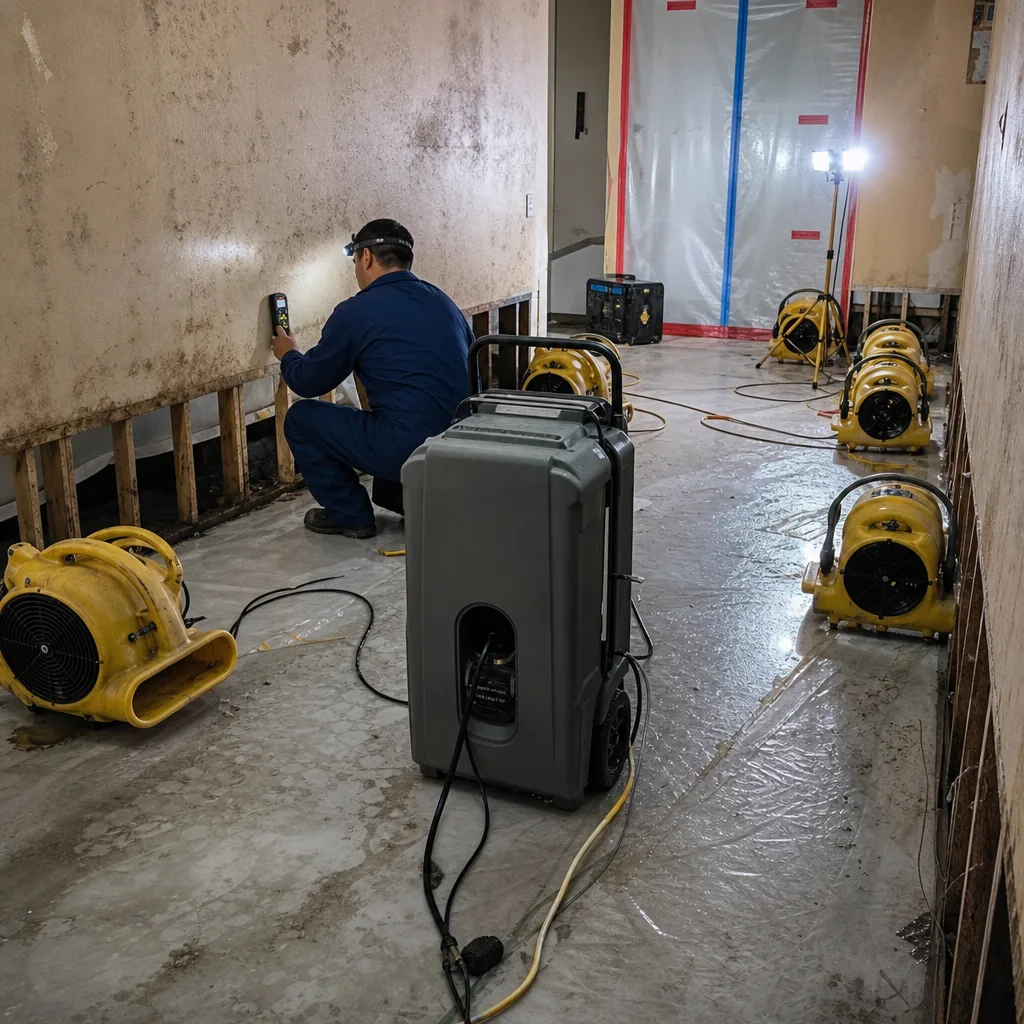
- What Damage Restoration Actually Produces
- How Las Vegas Construction Creates Hidden Moisture Paths
- The Documentation Chain Your Insurer Requires
- Why Low Humidity Is a Liability During Restoration
- Nevada Contractor Licensing and Your Warranty
- The Difference Between an Estimate and a Documented Scope
- Choosing a Restoration Company in Las Vegas
- Common Mistakes to Avoid
- When to Call a Professional
- Frequently Asked Questions
BeforeAfterWhat Damage Restoration Actually Produces
Most homeowners think restoration produces dry walls and clean carpets. What it actually produces, if done correctly, is a file. That file contains the evidence an insurance adjuster needs to justify every dollar of your claim.
At DryMark Restoration Las Vegas home, we’ve restored over 12,000 homes since 2011. Every job started with a written price before any work began, Haven Standard, Clause 1. Every job ended with a documented record when the crew left. The difference between a paid claim and a denied claim is rarely the damage itself. It’s the file.
Professional restoration in Las Vegas encompasses seven service categories:
- Water damage restoration: extraction, structural drying, and moisture mapping after leaks, floods, or appliance failures
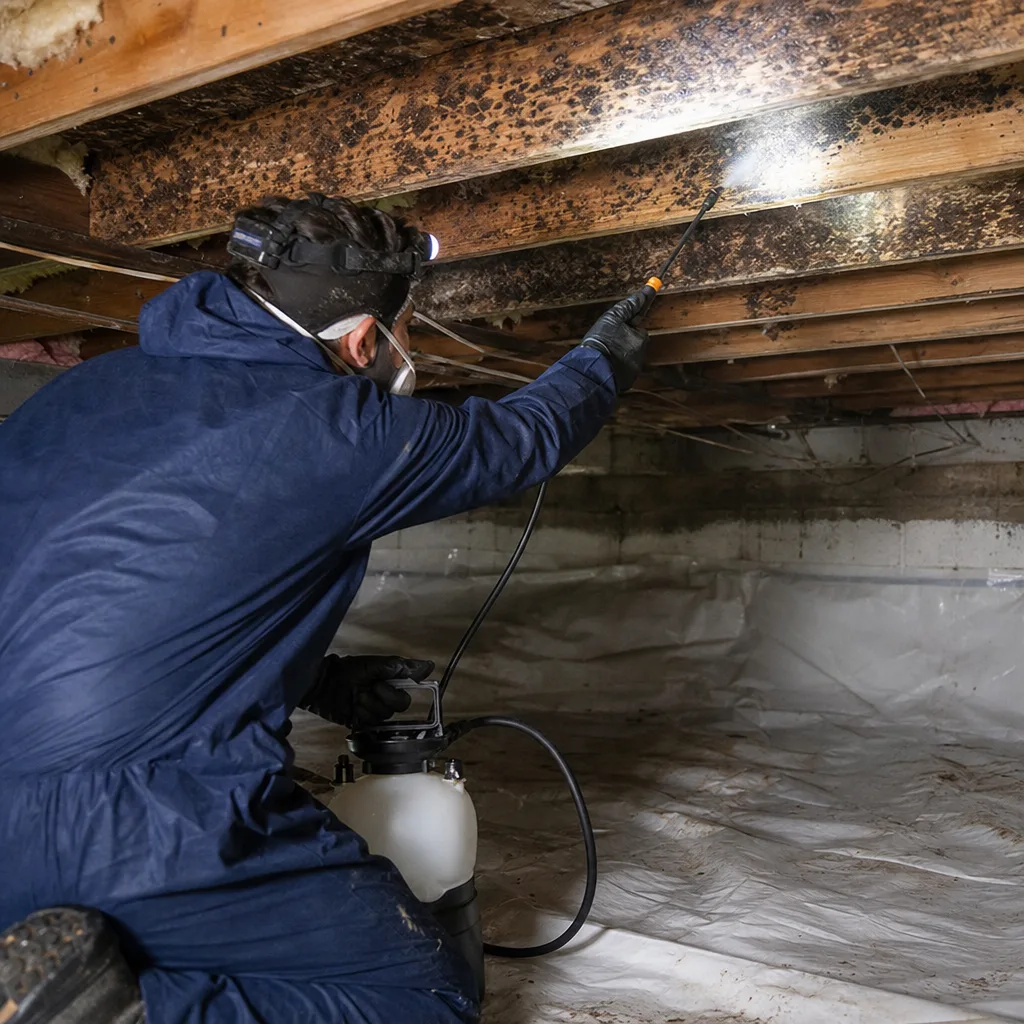
- Mold remediation: containment, removal, and clearance testing of mold-affected materials
- Fire and smoke damage restoration: soot removal, odor neutralization, and structural cleaning after combustion events
- Storm and disaster restoration: emergency board-up, temporary roofing, and structural stabilization
- Sewage cleanup: Category 3 water remediation with proper disposal and antimicrobial treatment
- Biohazard and crime scene cleanup: trauma scene decontamination to OSHA and EPA standards
- Reconstruction and cleanup: rebuild of damaged structural elements, finished to match pre-loss condition
Each category requires specific documentation protocols. Water damage demands daily psychrometric readings, temperature and relative humidity measurements that prove the drying environment was controlled. Mold remediation requires pre- and post-remediation air samples with laboratory chain-of-custody documentation. Fire restoration needs itemized contents inventories with condition photos before any cleaning begins.
The equipment matters because it produces the data. We deploy professional-grade drying systems from Dri-Eaz, Phoenix, and Injectidry, each unit documented by serial number and placement location. A Dri-Eaz Revolution LGR dehumidifier running in your Henderson living room for four days generates a log of pint removal, inlet and outlet conditions, and cumulative moisture extraction. That log is evidence. Without it, your adjuster sees a line item for “dehumidification” and questions whether four days were necessary.
How Las Vegas Construction Creates Hidden Moisture Paths
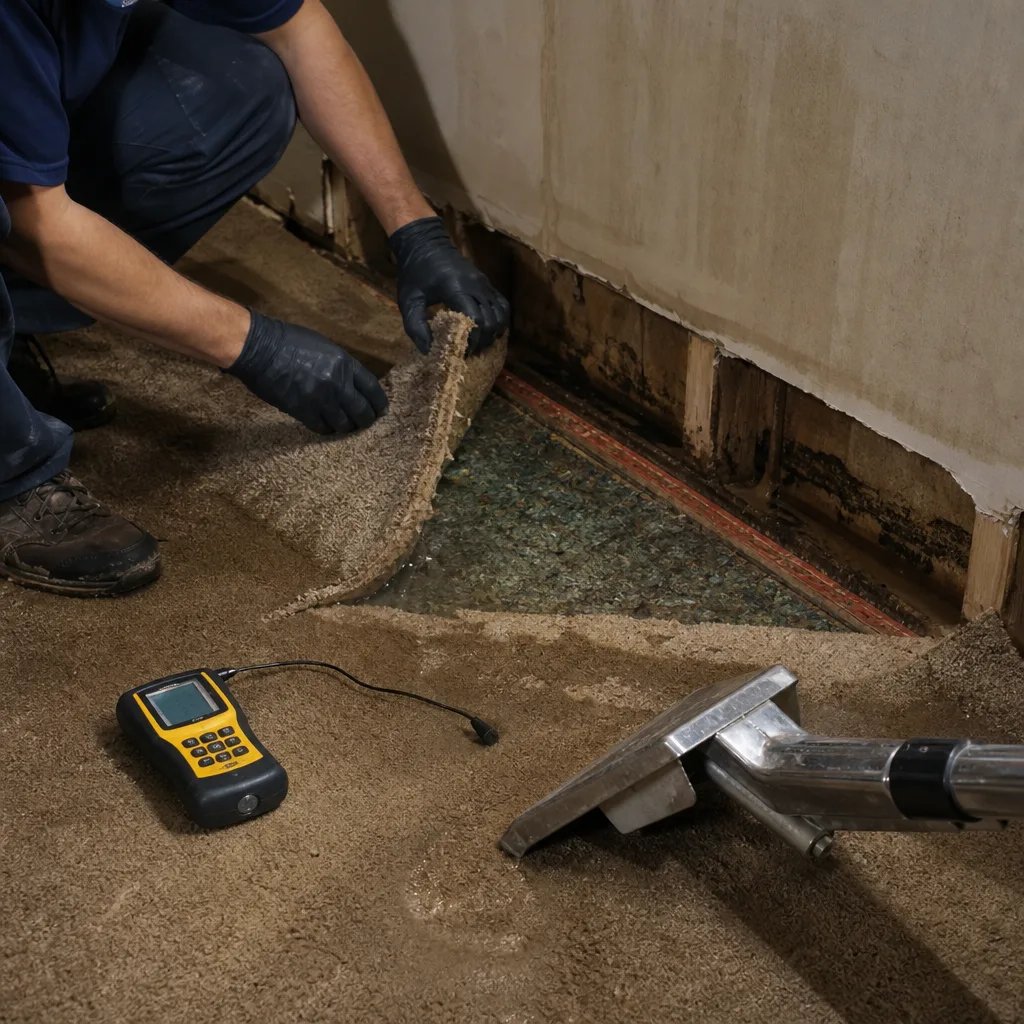
Las Vegas sits on caliche soil, a calcium carbonate-cemented layer that forms a natural moisture barrier roughly 6-18 inches below grade. This geology, combined with the region’s predominant slab-on-grade construction, creates moisture migration paths that standard restoration protocols routinely miss.
In a basement market like Chicago or Minneapolis, water follows gravity to a lower level. In Las Vegas, there’s rarely a lower level. Water hits the slab, spreads laterally along the caliche interface, and wicks upward through the slab edge where it meets the stem wall. We’ve measured sub-slab moisture content of 28% in a Centennial Hills home where the wall cavities read 12% and appeared “dry” by surface inspection.
Here’s what this means for your documentation:
- Initial moisture mapping must include sub-slab readings. A non-penetrating moisture meter on tile or vinyl flooring tells you almost nothing about what’s happening at the slab interface. Core samples or sub-slab probes are necessary in Las Vegas’s soil conditions.
- Perimeter walls require extended drying. The slab-to-wall joint is the primary wicking path. We’ve seen mold growth at baseplates 90 days post-job because the crew stopped drying when the drywall face registered dry, ignoring the bottom plate still at 18% moisture content.
- Garage-to-living space transitions are high-risk zones. In many Las Vegas homes, the garage slab sits at a different elevation with no moisture barrier continuity. Water from a water heater leak in a Northwest Las Vegas garage migrated 22 feet into the adjacent hallway before detection, following the control joint.
The documentation that catches this: a moisture map drawn at arrival, with readings taken at 16-inch intervals including sub-slab probes, and a follow-up map at 48 hours showing migration patterns. If your restoration company won’t produce this map, you’re gambling with your claim.
Neighborhoods built during the 2003-2007 boom, including much of Aliante and Providence, used post-tensioned slabs with minimal vapor barriers. These homes show disproportionate sub-slab moisture issues. We’ve documented cases in the Lakes area where improper initial mapping led to $8,000 in additional mold remediation six months later, entirely preventable with proper sub-slab assessment.
The Documentation Chain Your Insurer Requires
Insurance adjusters are contractually bound to pay for documented necessary work. The key word is documented. A claim without a complete documentation chain is a claim without leverage.
Here is the chain, in order, with what each link must contain:
- Initial moisture map: Diagram of affected areas with moisture content readings at defined intervals, material classifications (Type X drywall, OSB subfloor, engineered hardwood), and category of water (Category 1, 2, or 3 per IICRC S500). Date, time, technician name, and equipment serial numbers.
- Daily psychrometric readings: Temperature, relative humidity, and specific humidity recorded at equipment intake and exhaust points, plus ambient readings in unaffected areas for comparison. These prove the drying environment was controlled and progressing. IICRC S500 specifies daily readings minimum; we record twice daily on active jobs.
- Equipment placement photos: Timestamped, geotagged images showing each dehumidifier, air mover, and specialty drying unit in position, with visible serial numbers. These prevent disputes about whether equipment was actually on-site for billed days.
- Material removal documentation: Photos of removed materials with moisture readings at time of removal, justification for removal versus in-place drying, and disposal receipts for regulated materials.
- Final clearance report: Post-drying moisture readings matching initial map locations, comparison table showing reduction percentages, and written statement that materials have reached equilibrium moisture content for the Las Vegas climate zone.
Missing any link weakens the chain. Missing the daily psychrometric readings is the most common and most expensive gap. We’ve reviewed competitor files where a $6,400 drying invoice was reduced to $1,800 because the technician took readings on day one and day four only, with no data to prove the intervening days were necessary.
At Water Damage Restoration in Las Vegas, our standard deliverable includes all five links as a bound file, plus digital access through our client portal. This isn’t an upsell. It’s included on every job, Haven Standard, Clause 4: documented photo record on every visit.
The adjuster’s software, whether Xactimate or Symbility, prompts for specific documentation fields. When those fields are blank, the software defaults to the shortest reasonable duration and the lowest reasonable equipment count. Your documentation populates those fields. Without it, you’re asking an adjuster to override their own system on your word alone.
Why Low Humidity Is a Liability During Restoration
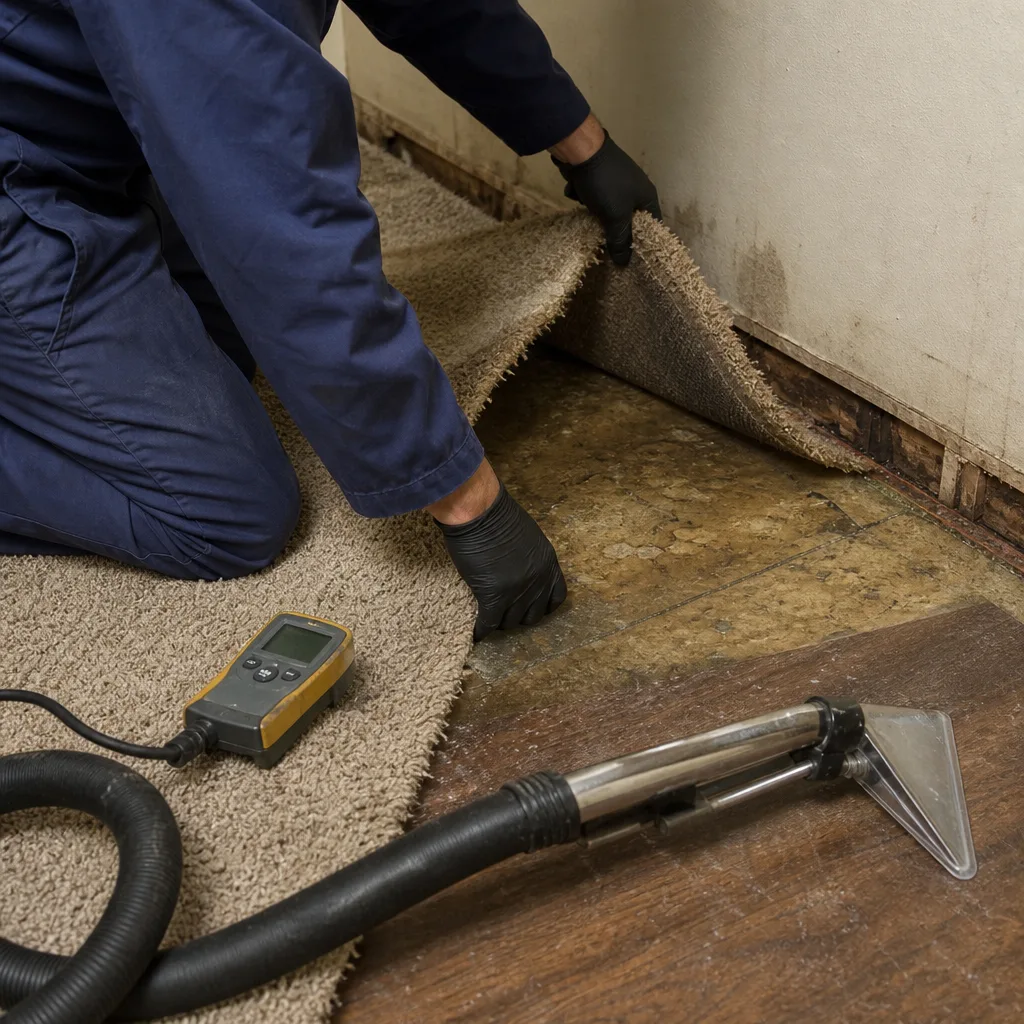
Las Vegas averages 292 days per year with relative humidity below 40%. This climate is marketed as a benefit. During restoration, it’s a trap.
Low ambient humidity drives rapid surface drying. A wet drywall face can read dry to touch in 36 hours with sufficient air movement. The core of that same drywall, particularly Type X fire-rated board common in Las Vegas multi-family construction, can remain at 18-22% moisture content. The surface reads dry. The core is still wet. Mold colonizes at 16% wood moisture equivalent. The homeowner sees “dry,” the crew packs equipment, and 60-90 days later there’s a musty smell and visible growth behind the baseboards.
We’ve documented this pattern repeatedly in Las Vegas’s low-humidity climate:
- Surface deception: Rapid evaporation from the material face creates a false endpoint. Only core readings or invasive probing reveals the truth.
- Equipment premature removal: Technicians working without strict psychrometric protocols see dropping ambient humidity and remove dehumidifiers before materials reach equilibrium moisture content.
- Vapor pressure differential miscalculation: In dry climates, the vapor pressure difference between wet materials and ambient air is extreme. This accelerates surface drying but can actually impede deep drying by creating a hardened surface layer, a phenomenon called case-hardening in wood and skinning in drywall mud.
Proper documentation catches this. Daily readings must show not just ambient conditions but material moisture content at depth. We use pin-type meters with insulated probes to isolate core readings, and we don’t clear a job until those readings match the equilibrium moisture content for Las Vegas’s climate zone, typically 6-9% for wood framing and 0.5% moisture content by weight for gypsum drywall.
The Mold Remediation in Las Vegas page details how hidden moisture leads to secondary damage. The short version: a $2,400 drying job that skips core documentation becomes a $14,000 mold remediation with no additional water event.
Nevada Contractor Licensing and Your Warranty
Nevada’s contractor licensing system creates specific boundaries around who can perform which restoration tasks. Mixing scopes without proper licensing doesn’t just risk regulatory action. It voids your warranty and can invalidate your insurance claim. See Damage Restoration Permits, Codes & Inspections in NV: What You Need to Know for the regulatory framework.
The relevant classifications for restoration work in Las Vegas:
- B-2 General Residential Contractor: Can perform structural drying, demolition, and reconstruction of residential structures. Required for any structural modification, including drywall replacement beyond small patches.
- C-3c Carpentry, Maintenance and Minor Repairs: Limited to non-structural repairs under $1,000 per project. Cannot perform structural drying or material removal that affects structural elements.
- C-14 Steel Reinforcing and Structural Steel: Required for post-tensioned slab repair, relevant in Las Vegas’s prevalent post-tension construction.
- Asbestos and lead abatement certifications: Separate from contractor licensing, required for disturbance of pre-1981 materials in older Las Vegas neighborhoods like Huntridge or the historic district.
A company performing structural drying with only a C-3c license is operating outside scope. If they damage structural elements during demolition, their insurance may deny coverage. Your homeowner’s policy may deny secondary damage claims because the work was performed by an unlicensed contractor. Your warranty, if you have one, is void.
We see this most often in contents pack-out and storage scenarios. A B-2 contractor can remove and store contents as part of a restoration scope. A C-3c contractor cannot legally perform this work if it exceeds the minor repair threshold. Yet many Las Vegas restoration companies use C-3c technicians for pack-out to reduce labor costs, exposing the homeowner to liability if items are damaged in storage.
Before work begins, verify license classification through the Nevada State Contractors Board. Ask specifically: “What is your license classification, and which tasks on my job does it cover?” Document the answer. If a company hesitates to provide license numbers or speaks vaguely about “being fully licensed,” that’s a signal to obtain a second opinion.
Our Free Second Opinion on any competitor’s written estimate includes license verification. Bring us another company’s scope and we’ll confirm whether the proposed work matches their legal authority to perform it. No charge. Haven Standard, Clause 7.
The Difference Between an Estimate, a Scope of Work, and a Documented Scope
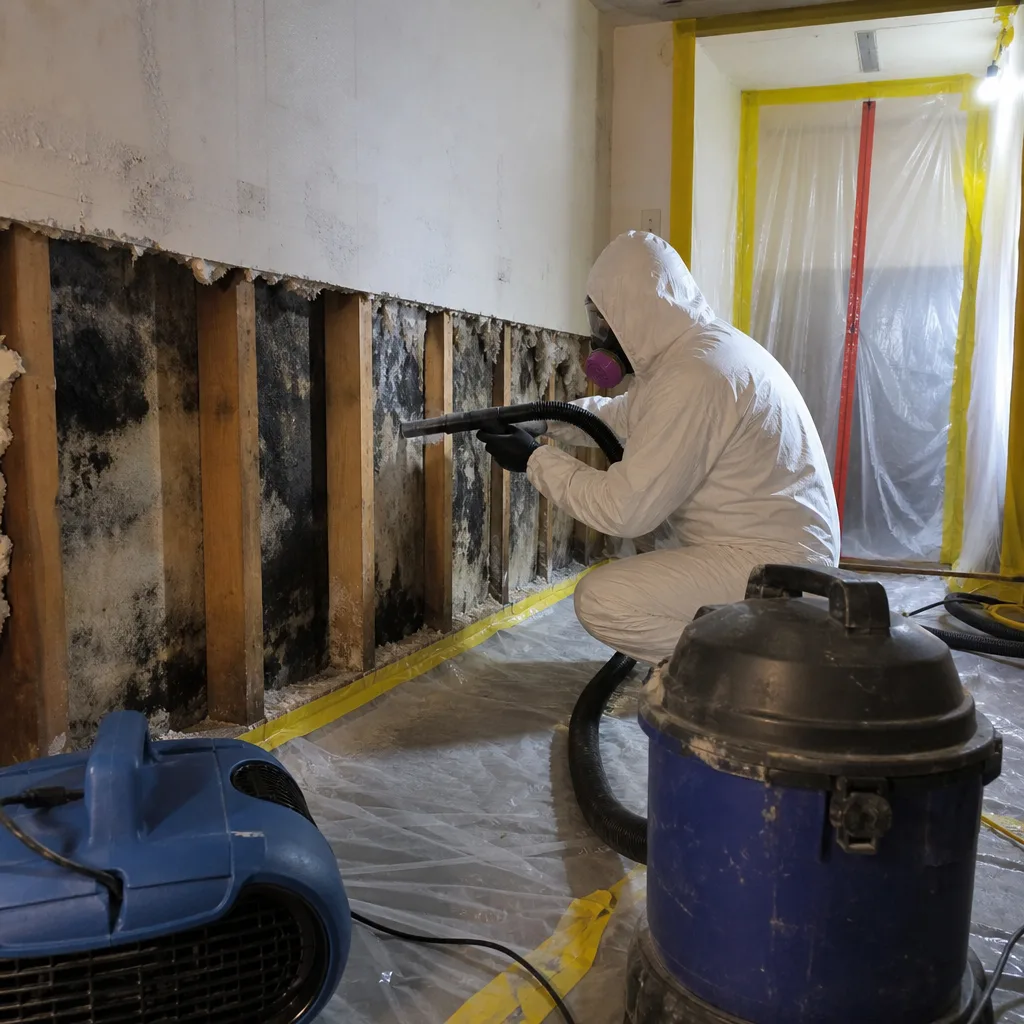
These three documents are not interchangeable. Using the wrong term at the wrong stage costs homeowners thousands.
An estimate is a preliminary price based on visible damage and assumed conditions. It’s useful for initial budgeting and insurance notification. It is not a commitment to perform specific work at a specific price. Most phone estimates and “free quotes” fall in this category.
A scope of work lists the tasks to be performed. It may or may not include prices. A scope without unit costs is a checklist, not a contract. Insurance adjusters can accept or reject individual line items from a scope, and without unit pricing, you have no basis to dispute their valuation.
A documented scope with line-item unit costs is the only document that satisfies Haven Standard, Clause 1. It specifies each task, the quantity (square feet, linear feet, each), the unit price, and the extended total. It references the moisture map and photo documentation that justify each line item. It is signed by both parties before work begins. No additions without written change orders.
Here’s why the distinction matters for insurance:
| Document Type | Adjuster Obligation | Homeowner Leverage |
|---|---|---|
| Estimate | None; informational only | None |
| Scope without unit costs | Review and respond to line items | Limited; no basis to dispute valuation |
| Documented scope with unit costs | Honor contractually or justify deviation in writing | Full; documented basis for every dollar |
Insurance adjusters are contractually required to honor documented scopes with unit costs when the documentation supports the work. Xactimate, the industry standard pricing software, outputs unit costs by line item. If your restoration company provides a single lump sum, you’re accepting an information asymmetry that benefits the insurer.
Our written price before any work starts is always a documented scope with line-item unit costs. Every time. No exceptions. Haven Standard, Clause 1. We’ve had adjusters initially dispute our scope, then accept it in full when presented with the moisture map, daily logs, and equipment photos that justify each line.
Choosing a Restoration Company in Las Vegas
The Las Vegas restoration market includes franchise networks, independent operators, and construction companies that added drying equipment during the 2020-2023 housing boom. Here’s how to distinguish documentation-first operators from the rest.
Verify live response capability. Water moves continuously. A company that promises “24-hour response” but routes calls to voicemail at 2 AM is not responding to your emergency. We maintain live person coverage on emergency lines, 24 hours a day, 7 days a week. No voicemail trees. Test it: call at 11 PM and see who answers.
Demand pre-work documentation. Before any equipment runs, you should receive: a moisture map with readings, a written scope with line-item pricing, and a photo record of the damage in its initial state. If a company wants to “get started and sort out paperwork later,” they’re prioritizing billable hours over your claim integrity.
Confirm technician identification. Background-checked, uniformed technicians with visible identification should arrive in marked vehicles. You have the right to know who is in your home. We provide technician names and license verification before arrival.
Ask about equipment documentation. Which brands? Which models? How are readings recorded and stored? Professional-grade drying systems from Dri-Eaz, Phoenix, XPOWER, B-Air, and Injectidry are standard in quality operations. The specific model matters: a Dri-Eaz 1200H is not equivalent to a Dri-Eaz Revolution. Serial numbers should appear in your file.
Review the warranty in writing. Verbal promises of “making it right” are not enforceable. Our 365-Day Done Right Promise is a signed guarantee under The Haven Standard, not a marketing line. If it’s not done right, we make it right. The address of that promise is Clause 9, printed on every contract.
Las Vegas neighborhoods present specific considerations. In Summerlin and the Ridges, homeowners associations require notification before exterior equipment placement or dumpster delivery. In downtown high-rises, water damage in one unit often affects multiple floors, requiring coordination with building management and multiple insurers. In older neighborhoods near Charleston Boulevard, asbestos-containing materials require abatement certification before disturbance. A restoration company that doesn’t ask about these factors in the first conversation hasn’t done enough Las Vegas work to document your claim properly.
The Fire & Smoke Damage Restoration in Las Vegas page covers additional documentation requirements specific to combustion events, including soot testing and odor neutralization verification.
Common Mistakes to Avoid
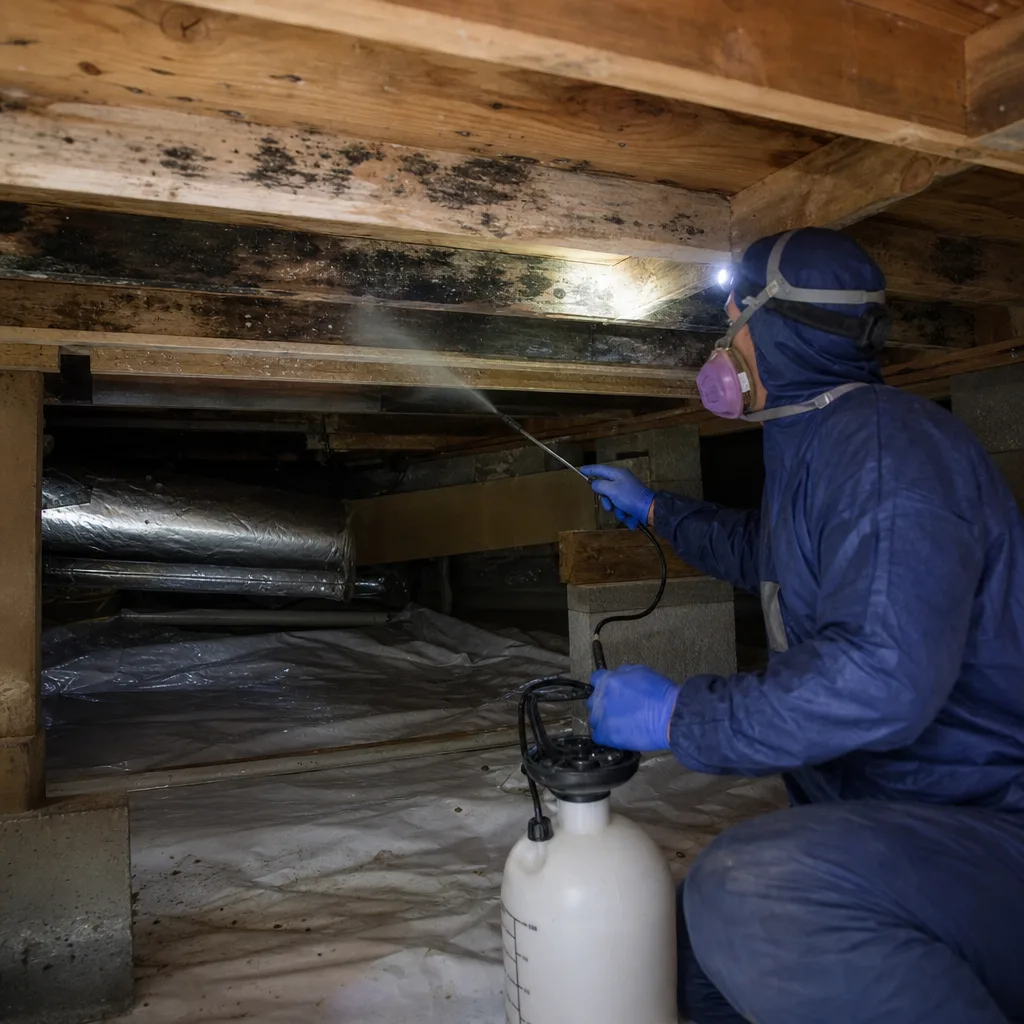
- Accepting a phone estimate as binding. No ethical restoration company can price water damage accurately without on-site moisture mapping. A phone estimate is a guess, not a contract, and insurers know it.
- Skipping the sub-slab reading in slab-on-grade homes. In Las Vegas’s caliche soil conditions, this is where hidden moisture lives. We’ve seen $3,200 jobs become $11,000 mold remediations because the slab wasn’t checked.
- Allowing equipment removal based on touch-dry surfaces. Low humidity deceives. Demand core moisture readings and written clearance before authorizing equipment pickup.
- Signing a scope without unit costs. Lump-sum pricing gives you no leverage if the adjuster disputes individual line items. Every task should be priced separately.
- Failing to verify contractor license classification. A C-3c license cannot legally perform structural drying. Work by improperly licensed contractors voids warranties and jeopardizes claims.
- Not photographing contents before pack-out. Insurance disputes over contents condition are common after fire and water events. Your documentation, or your restoration company’s, is your only evidence.
- Ignoring HOA notification requirements. Many Las Vegas master-planned communities, including Summerlin and Henderson’s Green Valley, require 24-48 hour notice for exterior equipment or dumpster placement. Fines run $100-500 per violation.
When to Call a Professional
Call immediately for Category 2 or 3 water (gray or black water), any fire or smoke event, visible mold exceeding 10 square feet, or structural damage from storm or vehicle impact. These scenarios involve health hazards, regulatory requirements, or structural safety concerns that exceed homeowner capability.
For Category 1 water (clean supply line) under 50 square feet, with no structural materials affected, prompt extraction and drying may suffice. The threshold for professional involvement drops sharply in Las Vegas’s climate: rapid surface drying masks core moisture, and what appears manageable often isn’t.
Specific scenarios requiring documentation-first restoration: any water event affecting hardwood flooring (requires specialized drying to prevent cupping), any leak in a home with post-tension slab construction (common in Aliante, Providence, and Mountains Edge), and any event where insurance coverage is anticipated.
DryMark Restoration Las Vegas offers free estimates in Las Vegas. Call (702) 483-7932. Every estimate includes a preliminary moisture assessment, written scope with line-item pricing, and explanation of the documentation file you’ll receive. No work begins without your signed approval of a documented scope.
Frequently Asked Questions
Water damage restoration in Las Vegas typically ranges from $1,800 for limited Category 1 drying to $8,500+ for whole-house Category 2 or 3 remediation with material removal. Mold remediation averages $15-$30 per square foot of affected area, with containment and air scrubbing as separate line items. Fire and smoke restoration starts around $4,000 for localized cleaning and exceeds $25,000 for structural rebuild with contents restoration. Every job is priced in writing with line-item unit costs before work begins. Call (702) 483-7932 for a documented estimate specific to your damage.
Most homeowner policies cover sudden and accidental water damage, fire, and storm events, subject to your deductible and policy limits. Coverage excludes gradual leaks, maintenance-related issues, and most mold unless directly caused by a covered peril. The key variable is documentation: insurers pay documented necessary work and reduce or deny claims with insufficient evidence. Our file includes the moisture maps, daily logs, and photo records that satisfy adjuster requirements. We also coordinate directly with your adjuster and provide the written scope with unit costs that their software requires for full valuation.
For emergency water and fire damage, DryMark Restoration Las Vegas maintains live phone coverage and dispatches crews 24 hours a day, 7 days a week. Response time varies by location and current demand, but our dispatch protocol prioritizes active water events to minimize secondary damage. Reconstruction and non-emergency remediation are scheduled, not dispatched, with written scope and pricing confirmed before any work date is set. Call (702) 483-7932 to confirm current availability for your situation.
For Category 1 water under 50 square feet with no structural material involvement, DIY extraction and drying may be adequate. For anything larger, involving multiple rooms, or with any uncertainty about water category or material moisture content, professional assessment is warranted. Las Vegas’s low-humidity climate creates particular risk: surface-dry materials with wet cores lead to hidden mold in 60-90 days. Our Free Second Opinion on any competitor’s written estimate can confirm whether proposed work is necessary and properly scoped.
We do, with your authorization. Our documentation file, moisture maps, daily psychrometric logs, equipment photos, and written scope with unit costs are formatted specifically for adjuster review. We attend adjuster meetings when requested, provide real-time clarification on scope items, and supply additional documentation as needed. Your role is to authorize our representation and review the final settlement. The goal is a fully paid claim without the back-and-forth that delays repairs.
Structural drying typically requires 3-5 days for Category 1 water in standard residential construction, 5-7 days for Category 2 or 3, and 7-10+ days when sub-slab moisture is involved. Mold remediation adds 2-4 days for containment, removal, and clearance testing. Fire restoration varies widely: localized soot and odor removal may take 3-5 days, while structural rebuild with contents restoration extends to weeks or months. Reconstruction is scheduled work with defined milestones, not emergency dispatch. Every timeline is documented in your written scope with completion criteria, not open-ended promises.
The Bottom Line
Damage restoration in Las Vegas is not primarily about drying equipment or construction skill, though both matter. It is about producing a documentation file that proves the work was necessary, properly executed, and fairly priced. Las Vegas’s caliche soil, slab-on-grade construction, and deceptively dry climate create restoration challenges that standard protocols miss. The homeowners who recover fully are those who demand sub-slab moisture readings, daily psychrometric logs, equipment placement photos, and a final clearance report, all assembled into a file that answers an adjuster’s questions before they ask them.
The alternative is the Summerlin homeowner, the $34,000 claim, the $11,000 payment, and the $23,000 gap that became her responsibility because the paperwork wasn’t there.
We don’t think that should happen. Haven Standard, Clause 1: written price before work begins. Clause 4: documented photo record on every visit. Clause 9: 365-Day Done Right Promise. These aren’t marketing lines. They’re the address of specific promises, printed on every contract, that turn restoration from a gamble into a documented process with a known outcome.
Written by Alicia Brennan, Owner at DryMark Restoration Las Vegas, serving Las Vegas since 2011.